


When the Wood Paints with Me: The Effects of a Wood Panel's Natural Texture on a Custom Portrait Painting
The Mona Lisa, which the Louvre calls "the world's most famous painting," was not painted on canvas. Leonardo da Vinci painted it in oils on a thin panel of poplar, a wood fairly common in Italy and in Florence in particular. Over the years the panel became slightly convex and even split, because the wood it is made of is highly sensitive to changes in humidity. According to the Louvre Museum, the crack runs down from the top of the panel, crosses the hair, and stops at the level of the forehead, almost miraculously.
Wood is not an indifferent surface. It goes on swelling and shrinking with changes in humidity long after the last brushstroke. A portrait painting on wood begins with that recognition. It is an artistic dialogue between the human face and the raw material. This article follows that dialogue from the mummy portraits of Roman Egypt to the modern living room. Along the way, it answers several questions: what the difference is between painting on wood and painting on canvas, how wood affects the feel of a space, whether a painting on wood is durable, and whether it needs a frame.
From Fayum to the Renaissance: Portraits Born on Wood
According to the Canadian Conservation Institute, remarkable paintings on wood have survived from antiquity. The Fayum portraits are one example: these portraits, painted in Roman Egypt and set into the wrappings of mummies, are discussed in the article on portrait traditions. Of interest here, though, is the wood beneath the paint. The Metropolitan Museum of Art holds a mummy from Fayum with an inserted portrait of a youth, in encaustic on linden wood, from the end of the first century CE.
The wood itself holds a surprise. In a chapter published by the Getty Museum in 2020, Caroline Cartwright recalls what surprised her at the very start of her research, in 1996: most mummy portraits had been made of linden. Linden does not grow wild in Egypt and never has. As of May 2018, 79.4 percent of the painted panels whose wood had been identified came from imported European species. Linden headed the list, at 69.4 percent. According to Cartwright, this even-grained wood was particularly well suited to thin, light panels. These were bent so that they lay close against the wrapping above the mummy's face. Even then, the wood was shaping the form of the portrait.
In Europe, too, painters worked on wood for centuries. According to the National Gallery in London, most of the paintings that survive from the thirteenth century to the early sixteenth were painted on wooden panels. Poplar was common in Italian panels, and oak in Northern Europe. According to the Canadian institute, painters in Spain worked mainly on pine. As a rule, the wood was not left bare. Before painting, it was covered with gesso, the Italian word for gypsum, in several coats: coarse ones first, then fine ones. The gesso was scraped and sanded until it was perfectly smooth. The aim was an even surface to receive the paint. The wood disappeared beneath the white layer.
According to the Canadian institute, it was in the fifteenth century that Northern European painters began to use fabric as a support for oil paintings. Little by little, fabric took the place of wood. It made possible large, light paintings that could be rolled up and carried from place to place, unlike large paintings on wood. The National Gallery adds that wood panels are heavier and therefore harder to carry.
Munch's Kiss: When the Wood Grain Became the Image
Centuries later, another artist chose to reveal what the gesso had hidden. In 1902 the Norwegian painter Edvard Munch completed "The Kiss IV", a woodcut on Japanese paper. According to the Victoria and Albert Museum, the outlines of the embracing couple are the edges of a single woodblock. Munch printed this block over a background taken from a second block, a plank that had not been worked. The grain of the plank forms the pattern. Munch made four versions of this woodcut. In each one he tried out other textures behind the couple. The wood was not hidden. It became part of the image.
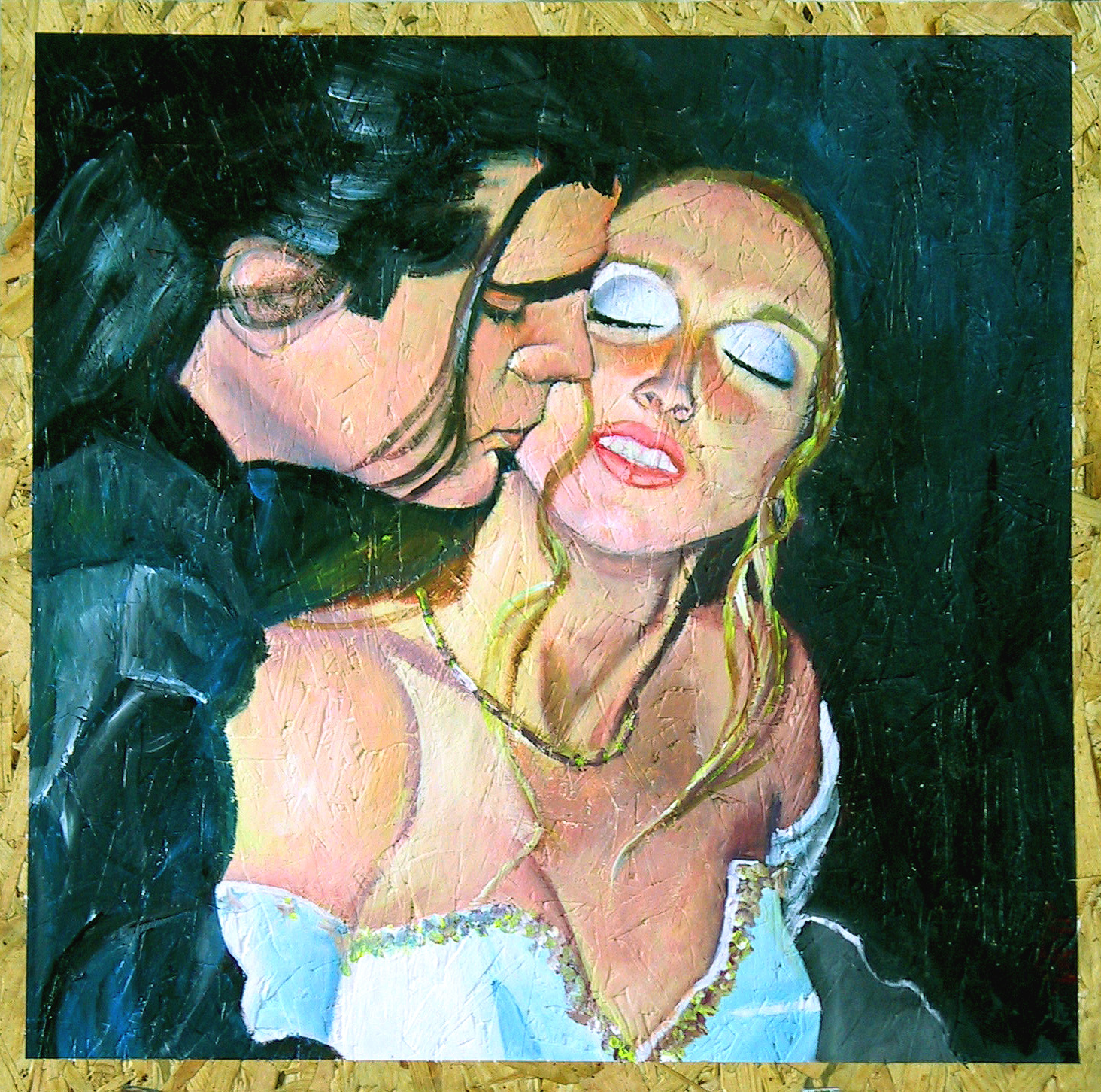
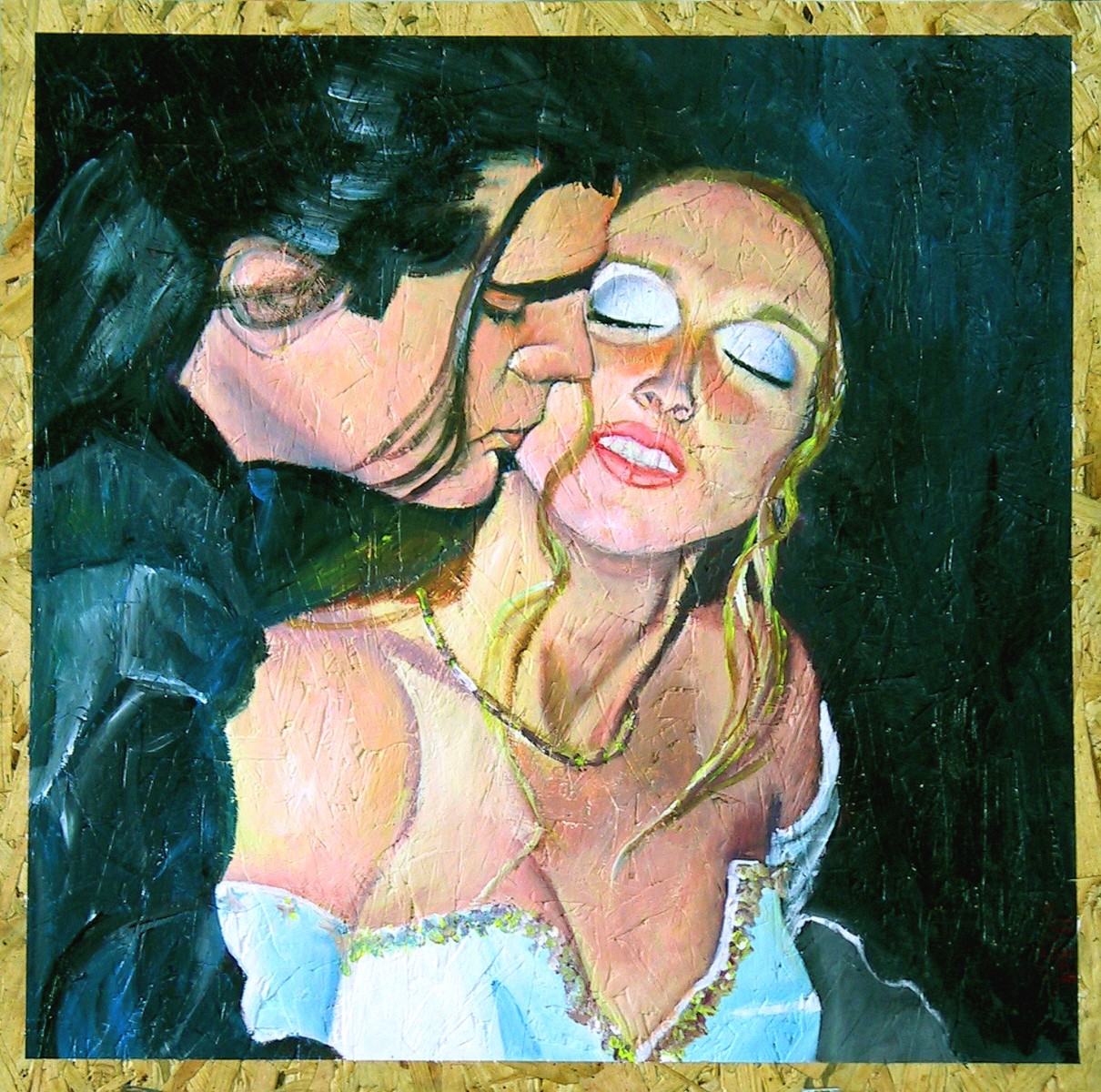
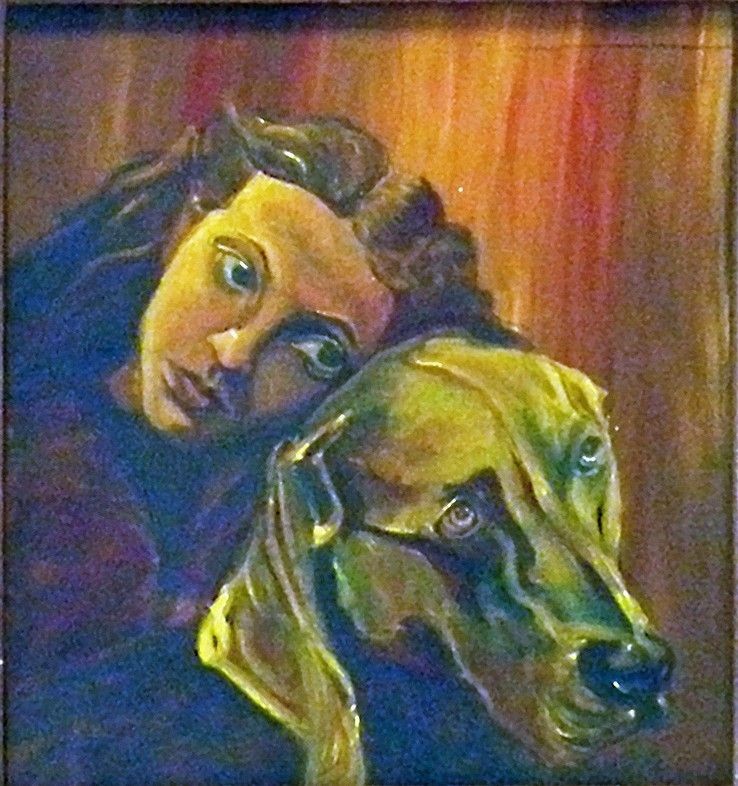
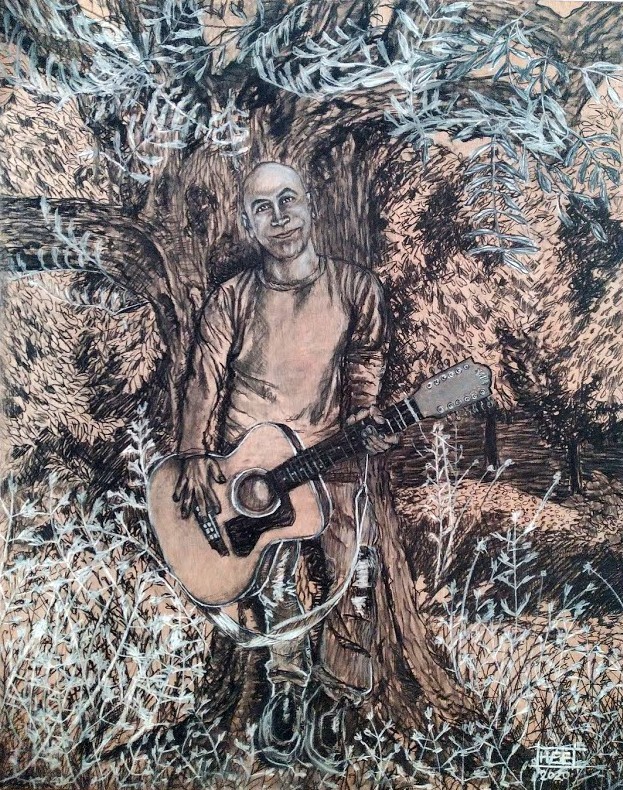
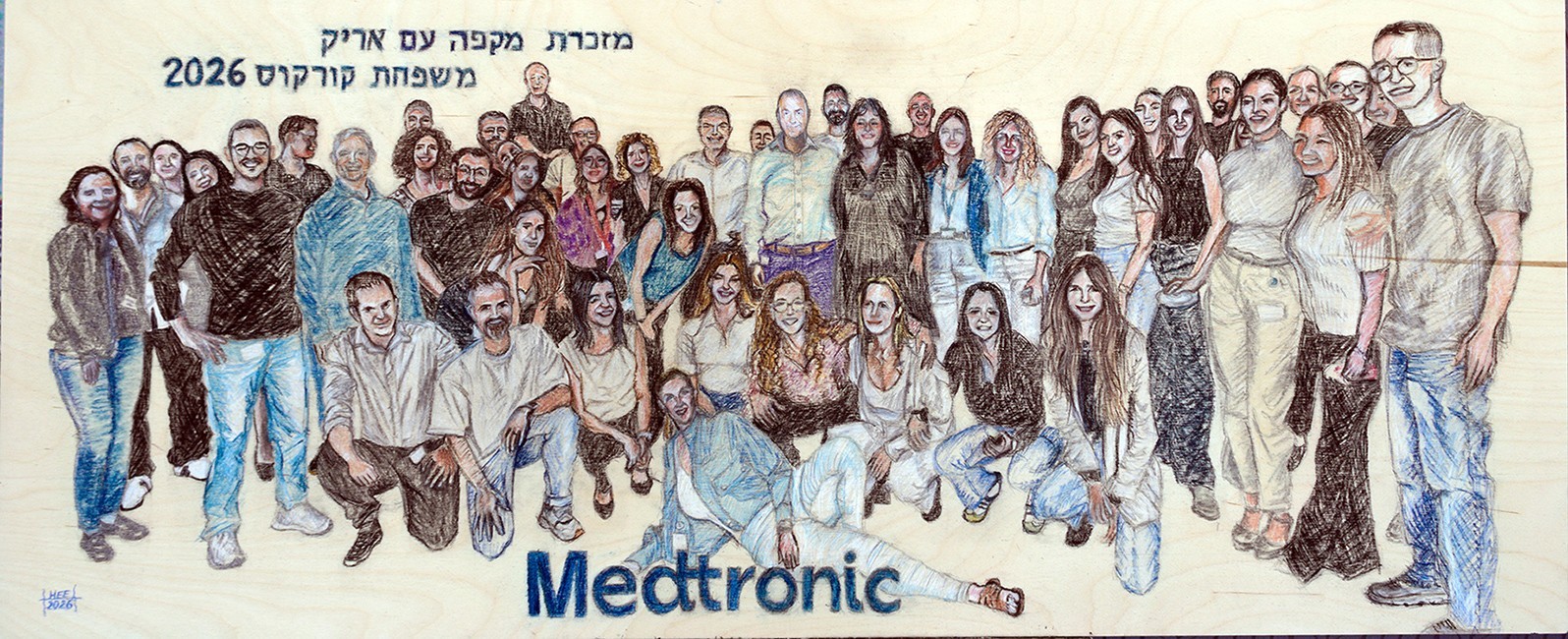
In the portrait paintings on wood that You Are Art's painter, Hee-Lee Soffer, creates on commission, the wood is likewise more than a working surface. It is an active partner in the work, one that dictates the direction of the brush, the level of detail, and the overall atmosphere. Among the paintings in this article, for example, is a couple's portrait intended as a wedding gift and made in acrylic on an OSB panel. According to the Wood Handbook of the U.S. Forest Service, OSB is an engineered panel made of thin strands of wood bonded with a water-resistant resin. In construction it is widely used to sheathe roofs, walls, and floors. Here a building material became the surface of a wedding gift. Also shown in the article are a full-body drawing in pencils on wood and a group portrait of a company's employees, drawn in charcoal with pastel pencils and pastel sticks on a panel of birch.
Painting on Wood or on Canvas: What Is the Difference?
As the National Gallery in London defines it, canvas is a sturdy cloth, left unbleached and usually woven from hemp or flax, that is attached to a wooden frame. It is usually primed before painting begins. According to the Canadian Conservation Institute, it must be stretched over the frame to keep it taut. Hee-Lee's oil portraits are made the same way: the canvas is stretched over a wooden frame, and on it the painting is built up in layers of oil paint.
Wood offers something different. It is a panel, not a stretched textile. In the past this was a practical virtue: according to the Canadian institute, egg tempera is generally linked with wooden panels. It becomes brittle once dry. A support that was not rigid would have made the paint crack. To this, a custom portrait painting on wood adds texture: it calls for a different style of painting, which yields a different visual result. The difference lies not just in the material beneath the paint. It shows in the result.
How Can a Painting on Wood Warm a Modern Space?
In 2006, researchers from the Faculty of Forestry at the University of British Columbia published a study on how people respond to wood in interior spaces. It drew on 119 respondents from the Vancouver area. Among the words that came up again and again to describe rooms with wood were "warm," "comfortable," "relaxing," "natural," and "inviting." Forty of the participants were interviewed about a picture of a modern living room. The most frequent first reaction was "cold." The second most frequent was "modern." Of the three living rooms shown in the interviews, the best liked by a wide margin was the rustic one.
A study from the Harvard Graduate School of Design, published in 2024 in the journal Building and Environment, looked at warmth in the literal sense. The researchers tested two offices in virtual reality, one finished in wood and the other in concrete. The participants, 38 in all, then estimated the temperature of the room. They judged the wood room to be warmer than the concrete one.
In a study from the School of Architecture at Université Laval in Quebec, published in 2019, 80 participants were asked whether they liked having wood in a space. All of them said yes. Some linked wood with memories of childhood, of protection, and of home.
There is also a caveat. In 2017, the Journal of Wood Science published a paper that reviewed research on how wood affects the human body. According to the paper, data in this field are extremely limited, although they had built up quickly over the fifteen years before it appeared. One of the experiments it describes, a small trial with fourteen students, compared wall panels of Japanese cypress with white steel panels. Across the group as a whole, no significant difference was found. But systolic blood pressure fell among those who liked the wood panels. Among those who did not like them, it did not change.
This may be read as a hint: the effect comes not from the wood alone, but from how people feel about it. A portrait painting on wood adds to the material something a wall panel does not carry: the faces of loved ones. It can warm a modern space and blend into a rustic or eclectic home. A painting can be commissioned to suit a particular room in the home, in size, colors, and subject. It is also possible to consult the painter about technique and composition. The relationship between the portrait and the wall is explored at length in an article devoted to portraits in interior design. The article on color theory deals with the emotional language of color.
Is a Painting on Wood Durable, and Does It Need a Frame?
According to the Canadian Conservation Institute, wood can be an excellent support for painting. But it is a hygroscopic material: it swells and shrinks across the grain as it takes in moisture and gives it off. In panel paintings prepared with gesso, this can be seen with the naked eye. When the wood swells, the layers of gesso and paint above it crack along the grain. That is how the crack pattern typical of most panel paintings forms: fine cracks, all running in one direction. Even after the last brushstroke, the grain goes on dictating a direction.
Canvas is not immune either. According to the same institute, it absorbs and releases moisture, growing taut when the air is humid and slowly slackening when it is dry. The institute adds a practical recommendation for paintings in general: do not hang them close to heating or cooling units, or on a poorly insulated exterior wall, where hot or cold air produces extremes of humidity. It is also wise to keep them out of direct sunlight. The Mona Lisa, too, is kept today, according to the Louvre, in a glass case in which temperature and humidity are controlled.
As for a frame, a painting on wood has a look that does not need one. The frame is the choice, and the responsibility, of whoever commissions the painting. What to weigh when choosing one is explained in a separate article on framing a portrait.
Frequently Asked Questions About Portrait Painting on Wood
What is the Mona Lisa painted on? On a wooden panel, not on canvas. According to the Louvre, Leonardo da Vinci painted it in oils on a thin panel of poplar wood.
What is the difference between painting on wood and painting on canvas? Canvas is a strong cloth stretched over a wooden frame and usually primed. Wood is a panel with a grain, which swells and shrinks as the humidity changes. Its texture calls for a different style of painting. That is why the visual result is different as well.
Can a portrait painting on wood be ordered from a photo? Yes. A custom painting from a photo can be made on paper, on canvas, or on wood. A portrait can also be ordered in a creative and distinctive technique. More on this can be found in an article on painting portraits from photos.
Which techniques are used to paint a portrait on wood? The Fayum portrait at the Met was made in encaustic. Egg tempera, according to the Canadian institute, is usually associated with wooden panels. Leonardo painted the Mona Lisa in oil. Among the portraits on wood in this article are works in acrylic, a water-based paint that looks similar to oil. There are also works in pencils, charcoal, and pastel.
Does a painting on wood need a frame? Not necessarily. A painting on wood has a look that does not need a frame. Framing is the choice, and the responsibility, of whoever commissions the painting.
Where should a painting on wood be hung? Away from sources of heat and cold. The Canadian Conservation Institute recommends not displaying paintings in direct sunlight, on a poorly insulated exterior wall, or near heating and cooling units.
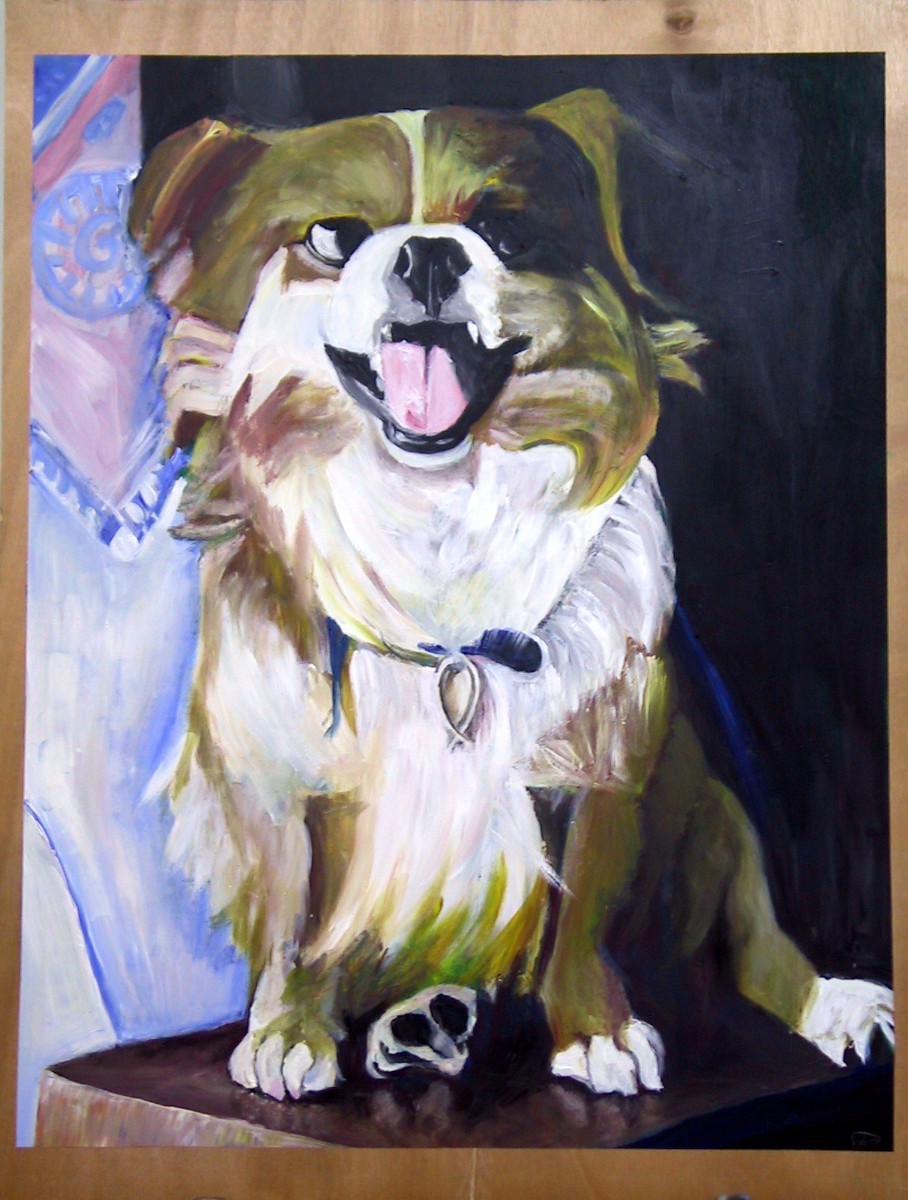
The Face and the Grain
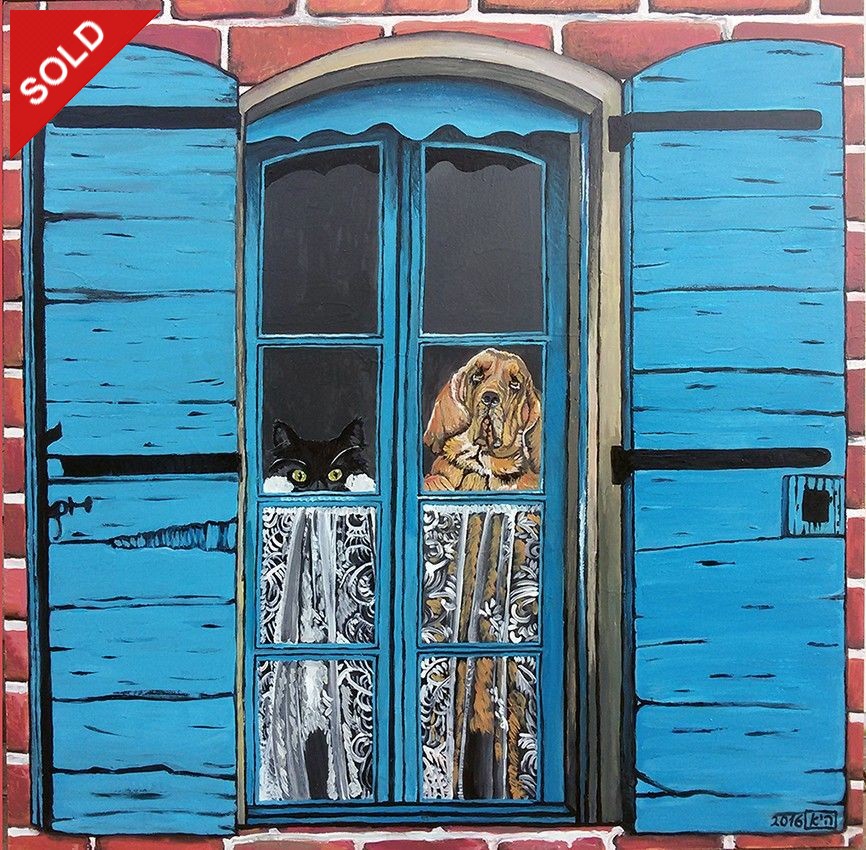
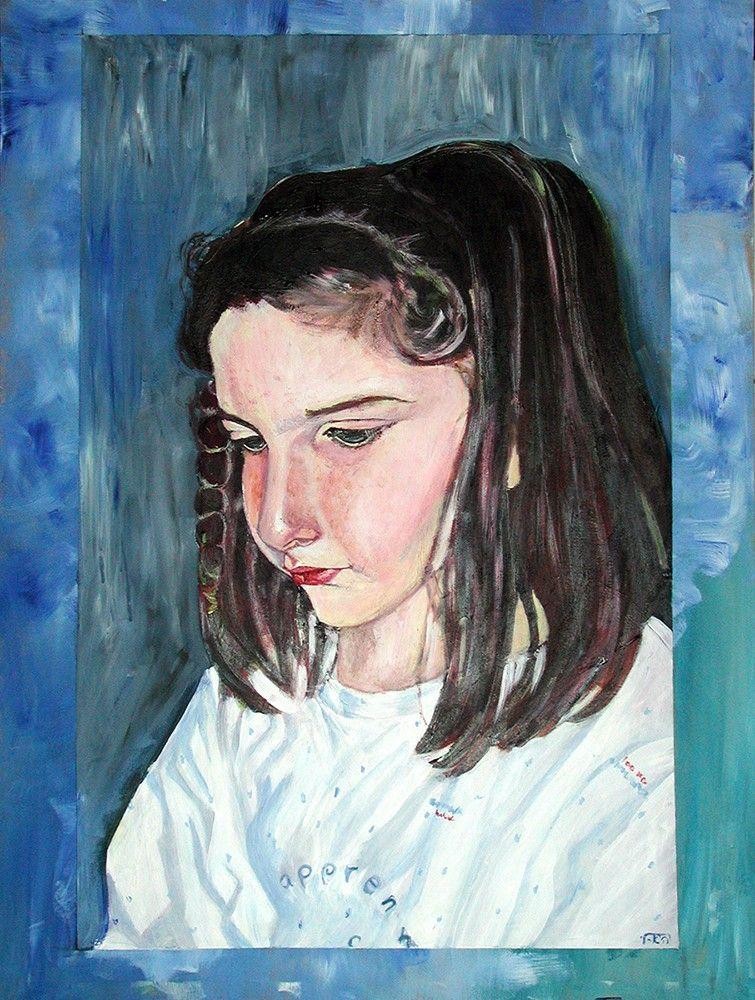
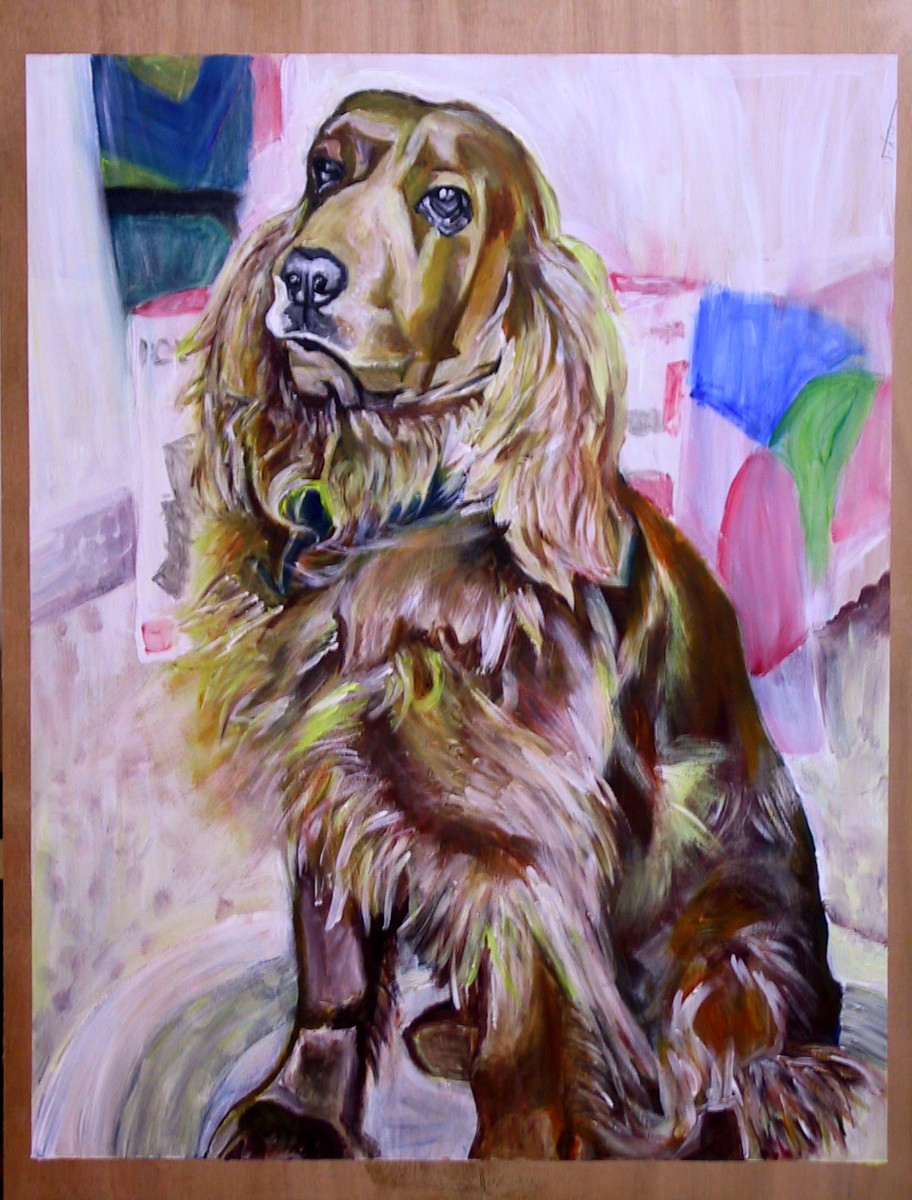
A portrait painting on wood does not ask the wood to disappear beneath a white layer. It invites the wood to take part: in the direction of the brush, in the level of detail, and in the atmosphere. The result is a portrait that carries both the human face and the character of the material. The article's gallery shows paintings on wood in acrylic, in pencils, and in charcoal with pastel. These portraits, alongside portraits in other techniques, can also be seen in the oil portrait gallery and in the drawings gallery.