


Brush, Human and Tail: The Special Bond Between People and Their Pets in Shared Portraits
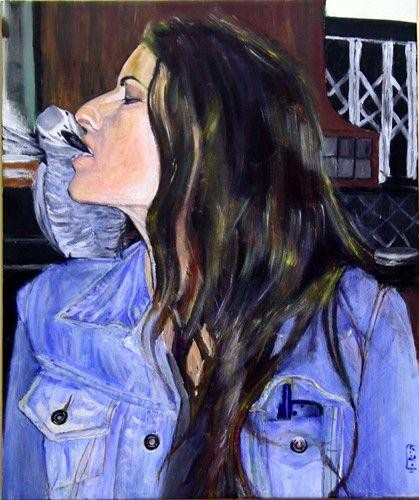
In one of my paintings a woman stands in profile. Her head is tilted slightly back. Her eyes are closed. A parrot touches her lips. That painting sent me back to something I had learned years before: an Athenian grave stele carved in marble some twenty-four centuries ago. Cut into it is a girl parting from her two pet doves. One of them pecks gently at her lips. In the painting and on the stele alike, a bird touches the lips. The stele is kept at the Metropolitan Museum in New York. Between that stele and my painting stands a long tradition of a portrait shared by a human and an animal.
A Portrait of an Animal Is Not a Portrait With an Animal
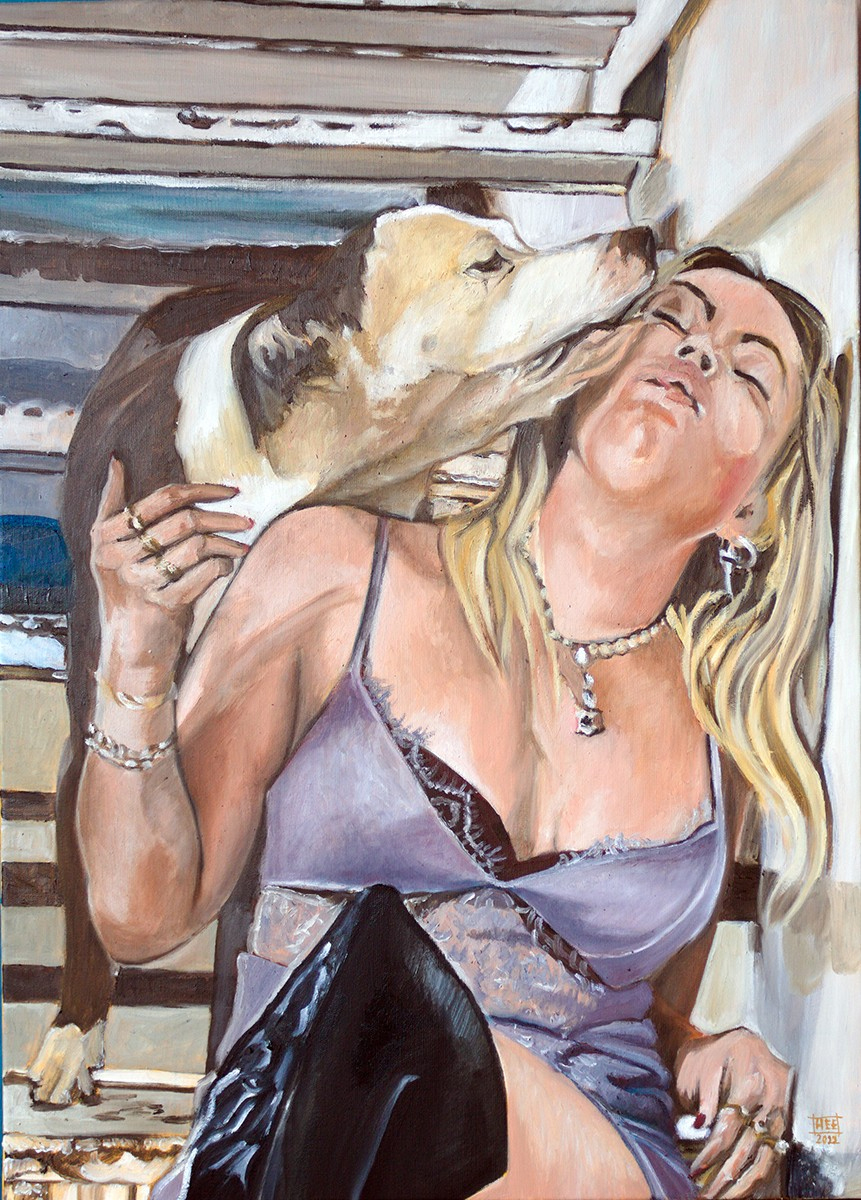
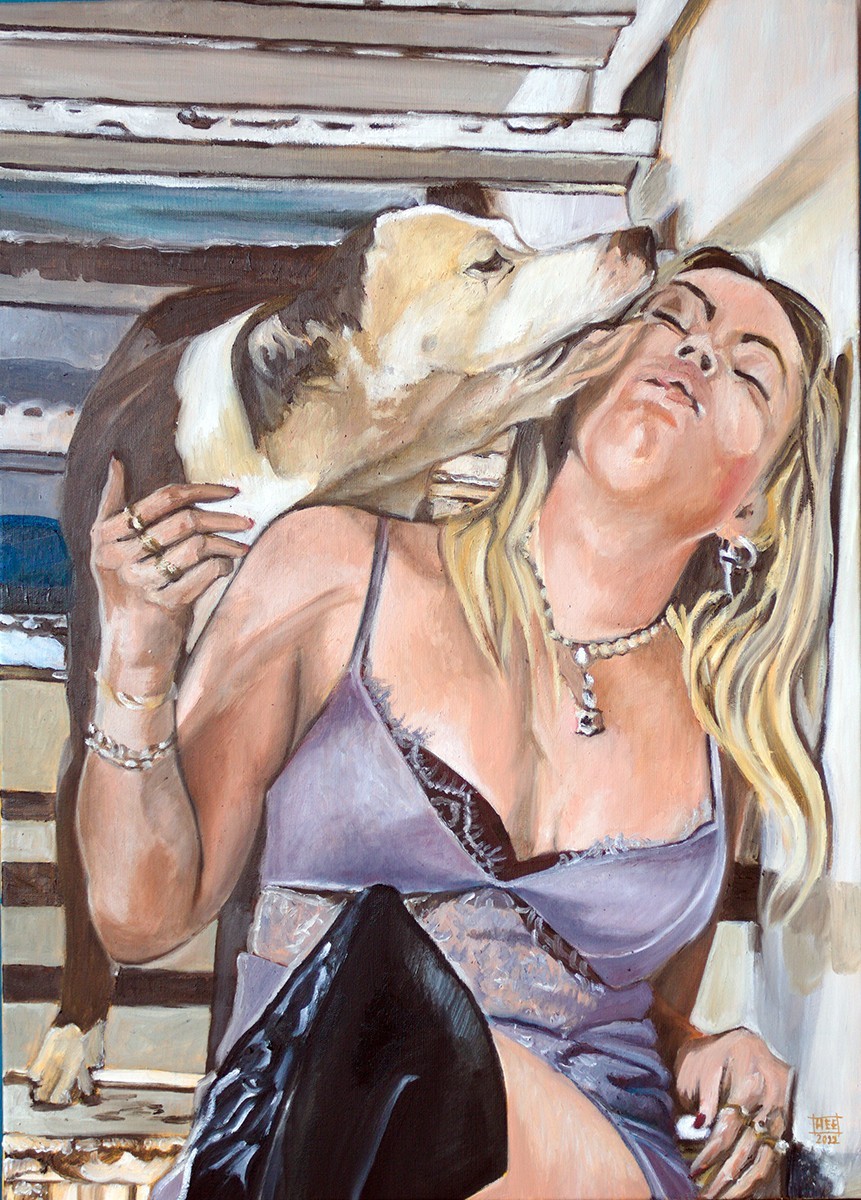
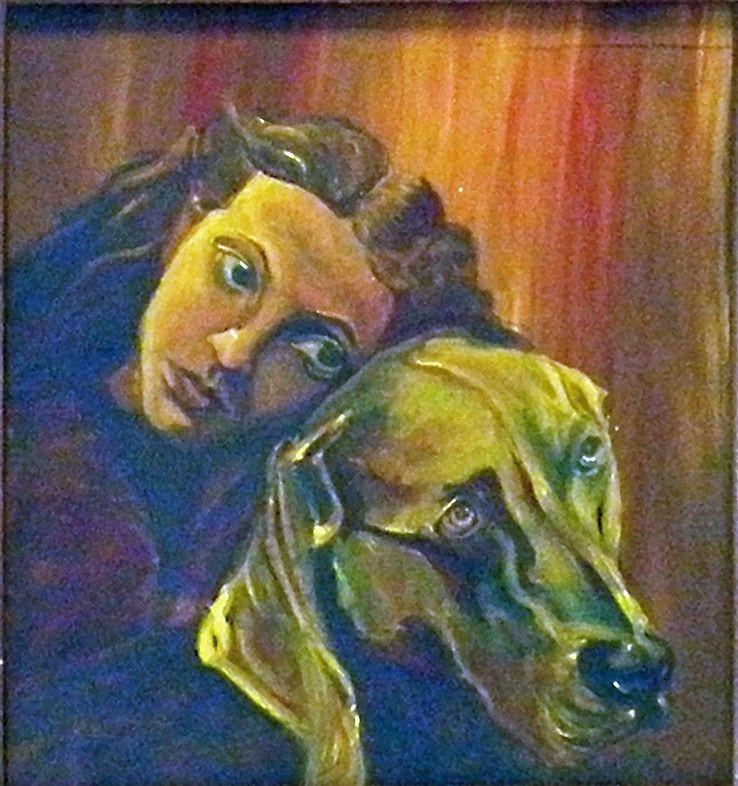
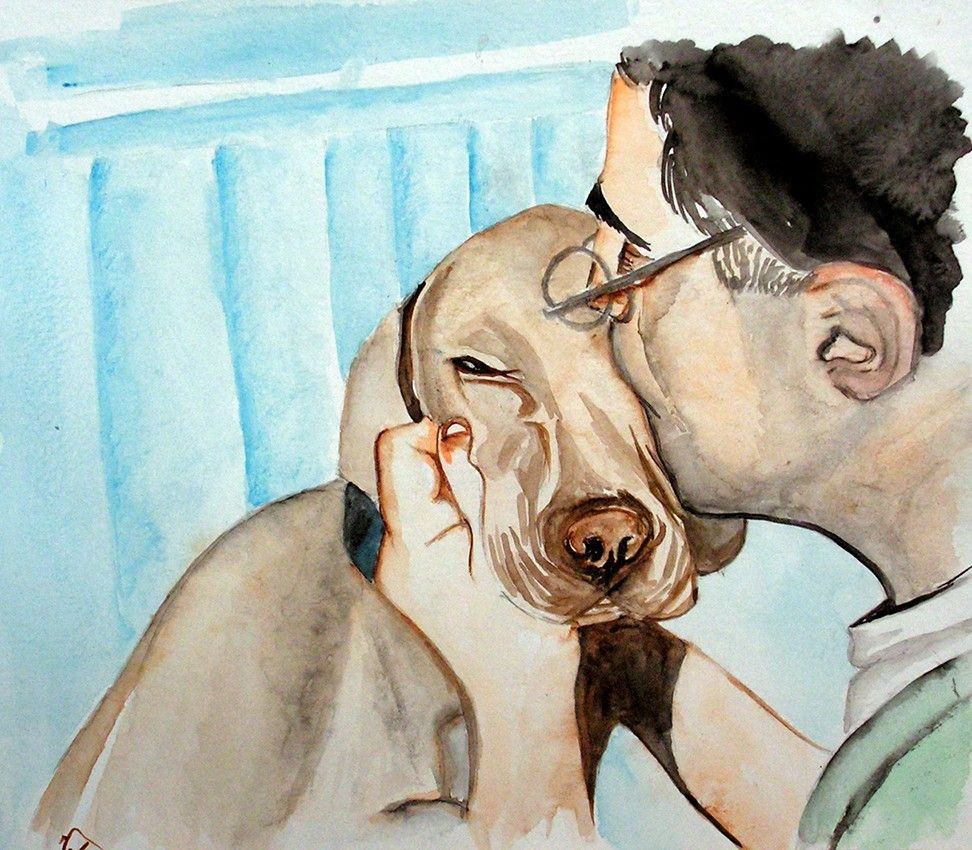
Two things that are often confused need to be separated here. A portrait painting of the pet alone is a familiar, much-loved genre, and I have written about it at length. A portrait painting with a pet is something else entirely. In such a portrait both figures are inside one frame. They look at each other, touch, lean on one another. The relation between them is the subject of the painting.
The difference is not technical. A shared portrait demands decisions: how much room the animal takes, where its gaze goes, whether it is in the lap or at the feet, whether the person holds the animal or the animal leans on the person. Each of those decisions says something about the relationship. I once wrote in Portrait With a Cat that cats appear in a great many paintings through history, yet inside portraits they are scarcer. The image of the cat in seventeenth-century Dutch painting was the subject of my master's studies in art history. That very scarcity inside the portrait is what makes the shared portrait so strong.
Twenty-Four Centuries of a Human and an Animal in One Picture
The Athenian stele, fifth century BCE. The small marble stele at the Metropolitan Museum, accession number 27.45, was carved in Parian marble between about 450 and 440 BCE. The museum writes that the grave gentleness of this child comes through in the tender goodbye she gives her pet doves. The text the museum addresses to children says that the birds are plainly comfortable in her company, that one of them gives her lips a gentle peck, and that both are content to remain in her arms. It is the earliest record I know of a figure commemorated beside the animals that lived with her.
Goltzius, 1597. The engraving Portrait of Frederick de Vries and His Dog is kept at the Cleveland Museum of Art under the number 1951.275. It carries one of the most moving stories I have come across. Hendrick Goltzius made it for a friend, the Venice-based painter Dirck de Vries, whose son was studying under him in Haarlem. The inscription at the center of the work, in the museum's translation, dedicates it to de Vries in friendship, and states that it stands there "to represent his absent son". Along the margin runs a verse by the Dutch scholar Petrus Scriverius. According to that verse, simplicity seeks faithfulness and loves it — the faithful dog with the innocent boy, whom Goltzius rendered faithfully in copper. The father in Venice received a sheet of paper bearing his son and his son's dog. The shared portrait came in place of presence.
Reynolds, about 1761. In the Portrait of the Ladies Amabel and Mary Jemima Yorke the animals do not accompany the composition. They build it. Their father commissioned the painting for the family house in St. James Square in London. The museum relates that the pose of Mary Jemima echoes an ancient Roman statue of a girl with a dove, while her hand keeps the bird away from the family dog. One act, a hand guarding a bird from a dog, stands at the center of the painting.
Goya, 1787–1788. The portrait of Manuel Osorio Manrique de Zuñiga is held by the Metropolitan to be "one of the most appealing and successful portraits of children ever painted." The museum describes a boy in a splendid red costume, whose parents were the count and countess of Altamira, standing beside a cage of finches, with three cats whose eyes are fixed on the magpie he keeps. In the magpie's beak is Goya's calling card, with his signature. The curator David Pullins notes something that is a key to the whole subject: a dog can usually be relied on to be loyal and friendly. A cat, by contrast, brings into the painting something that is not entirely domesticated.
Sébah, about 1880. Degas, 1889. Within a single decade the subject can be seen passing between two media. The photographer Pascal Sébah, who was born in Constantinople, his father Syrian and his mother Armenian, made in his studio a portrait of a man and his dog in the carte-de-visite format, a small and inexpensive photographic card developed in France and meant to serve as a calling card or to be collected. In those same years Edgar Degas drew in pastel the artist Ludovic Lepic, a friend of his, holding his Belgian griffon. The museum writes that the animal attests to the love of dogs that made him a known figure in the Paris of the late nineteenth century. Lepic died about a month after the portrait was completed, at fifty. A last portrait. Inside it, the animal that had kept him company.
What the Pet Does in a Portrait
Set those six works side by side and one pattern emerges. It is the heart of the matter here. In five of them the animal is no accessory. It carries a role without which the painting says something else.
In Goltzius it carries faithfulness, which the verse binds to the innocence of the child. In Reynolds it drives the small drama around which the composition was built. In Goya it brings in the tension and the ungovernable. In Degas it testifies to the character of the man. On the Athenian stele it is the object of the farewell itself. An animal that enters a portrait is not added to it. It changes what the portrait says.
That is also why a portrait painting with a pet is harder to make. A painting of one person has a single focus. A shared painting has two. They must hold together without one swallowing the other. In my oil paintings I work in the traditional European layering technique. In a shared portrait that depth matters doubly: fur, skin, the human eye, the animal eye. Each of them asks for its own treatment.
Veganism, Materials, and Who Counts as a Figure
There is a connection between my veganism and these paintings, on two planes.
The first plane is material. On my about page I noted that my partner and I are vegan. I am active in the field, and I make sure that none of the materials I use in my work come from animals. My brushes, for instance, are synthetic and are not made of animal hair. In a portrait painting of an animal this becomes almost literal. I see no sense in commemorating a beloved animal with a tool that came from another animal.
The second plane goes deeper. I have written before that the phrase "pets" does not fully represent what I feel. I prefer to call them companion souls, guardian angels, family by mutual adoption. A shared portrait does exactly that in visual language. It takes the animal out of the status of an object in the corner of the picture and places it as a figure, in the same frame, in the same light, finished to the same degree. Cats and dogs have always lived with us in our home. They are a significant part of my inspiration. When I place an animal in a painting beside its person, I am saying without words that this animal is someone.
Questions I Am Asked Before Ordering a Portrait Painting With a Pet
Can we have a shared painting if we have no single photograph together? Certainly. You can ask for different photographs to be combined into one painting. You can also ask for a particular background or for a change in the placement of limbs. In practice I receive separate photographs, the person in one and the animal in another. From them I prepare a composition mock-up in Photoshop. I send the mock-up for your approval before the work begins. This is how a family portrait and a couple's portrait are made as well, when there is no photograph with everyone in it.
Which photograph of the animal suits the work? I have written before that I prefer natural light, because a flash frightens the animal and natural light does not produce red eyes in the photograph. It matters to focus on the eyes and to let the expression be the center of the picture. You are welcome to send several photographs. I will choose among them together with you.
In which techniques can a shared portrait be ordered? In every technique I work in: oil, watercolor on paper, acrylic, pencil, charcoal, ink. A hand-drawn digital portrait is possible as well (no AI).
Can a shared portrait be ordered when the animal is already gone? It can. I once wrote that parting from a beloved animal is hard also because there is not always someone to share it with. My oil painting gallery shows memorial portraits of animals. The watercolor gallery holds further memorial paintings of pets. Such a painting can also be ordered when the person is no longer here. The pastel of Degas was made about a month before the death of the man in it. The portrait remained after him, with the animal that had lived at his side.
The Portrait That Hangs on the Wall
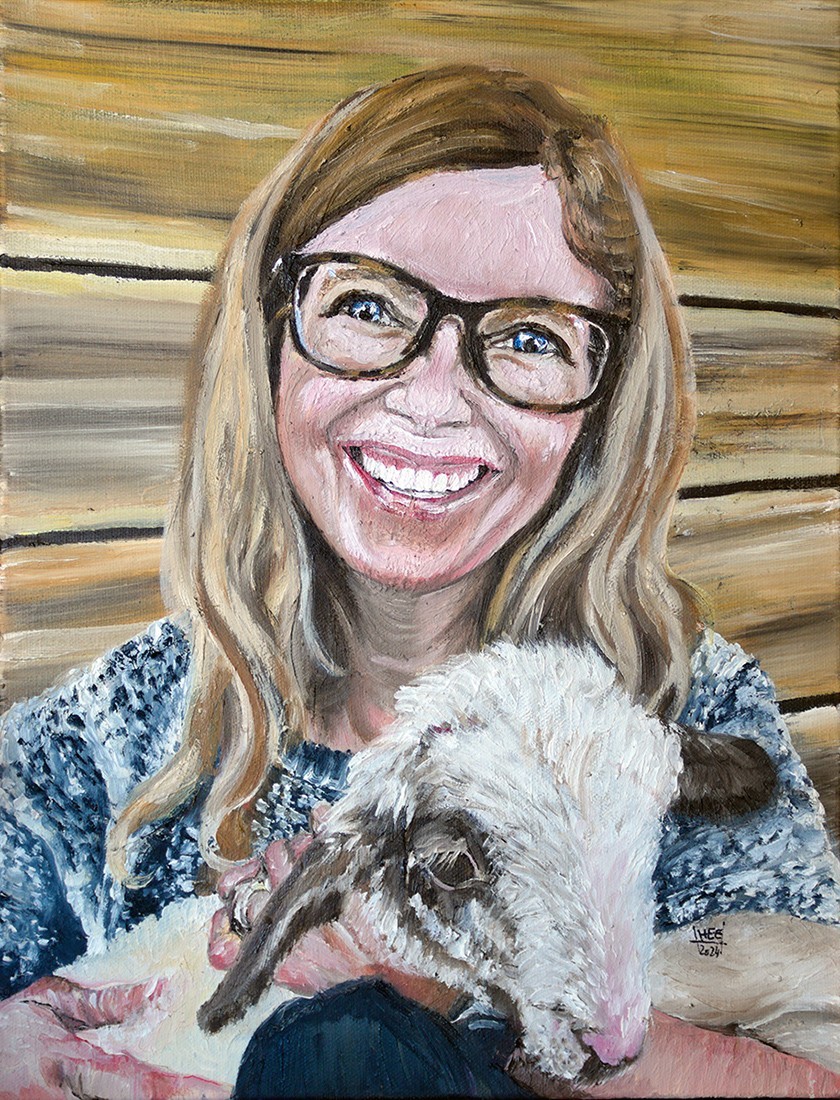
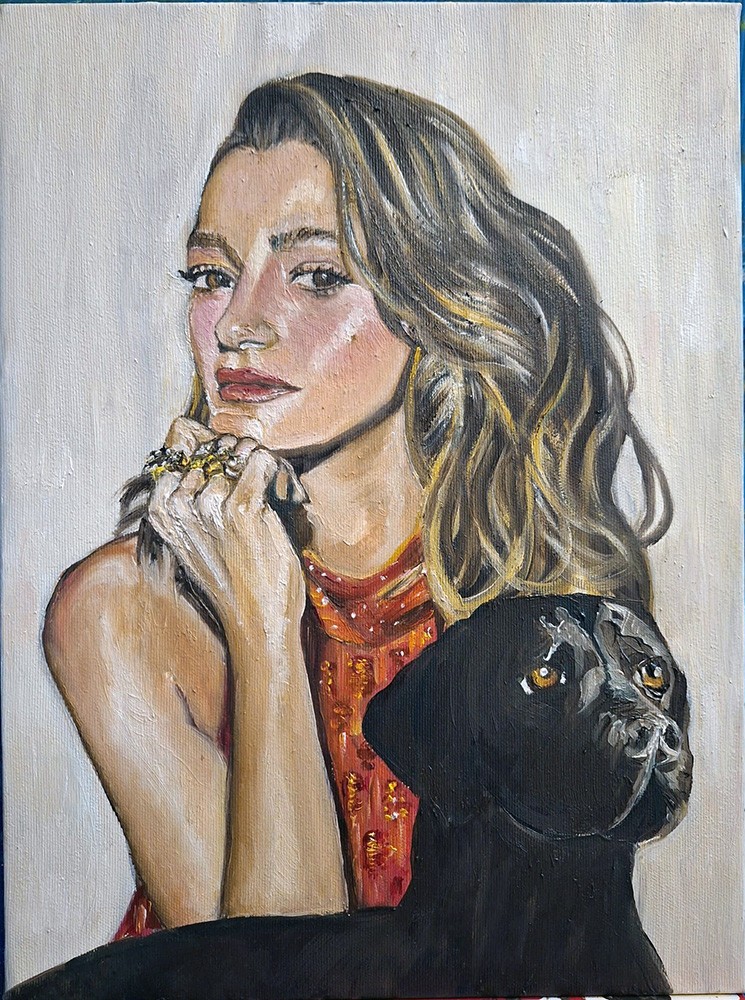
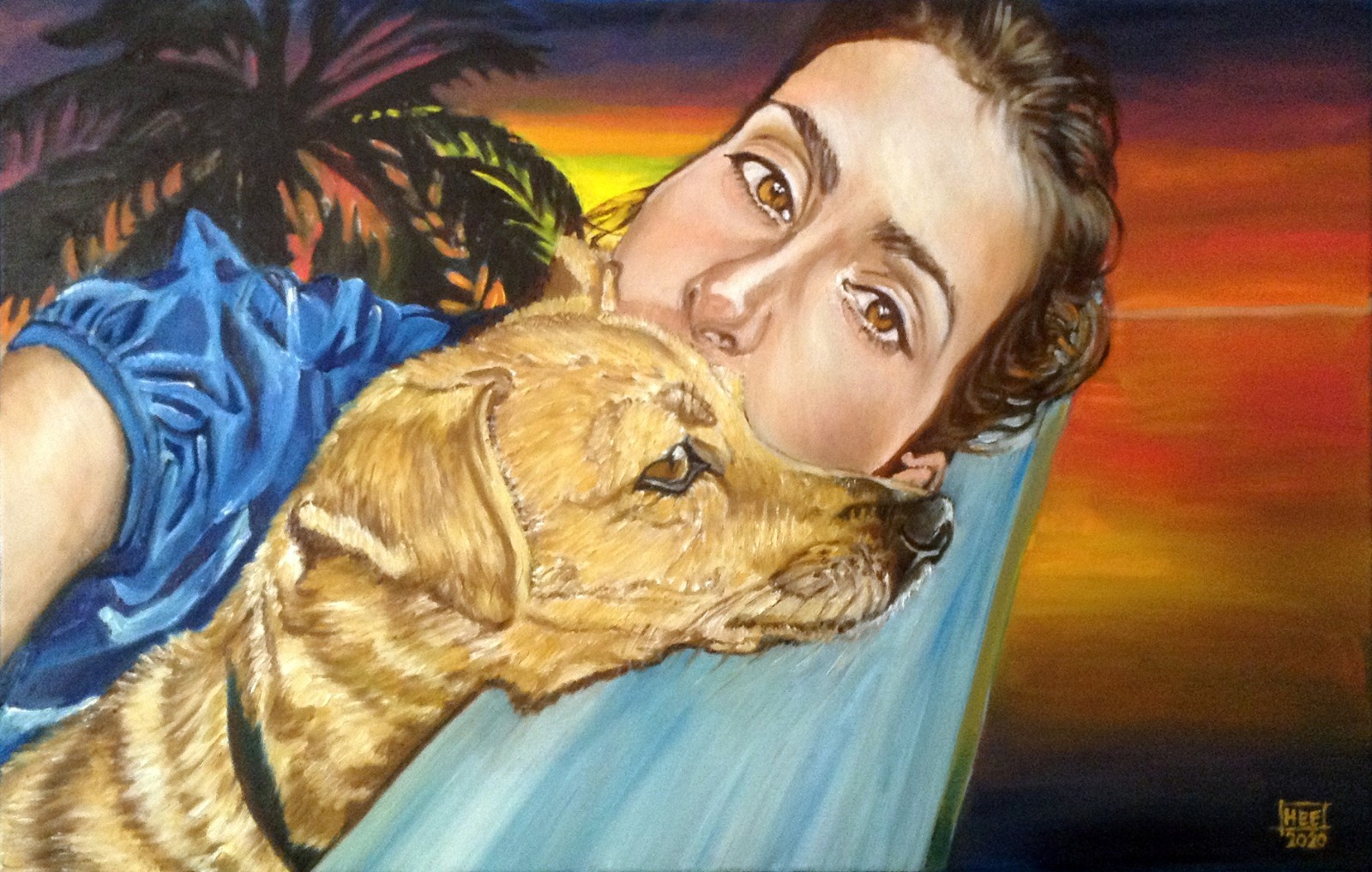
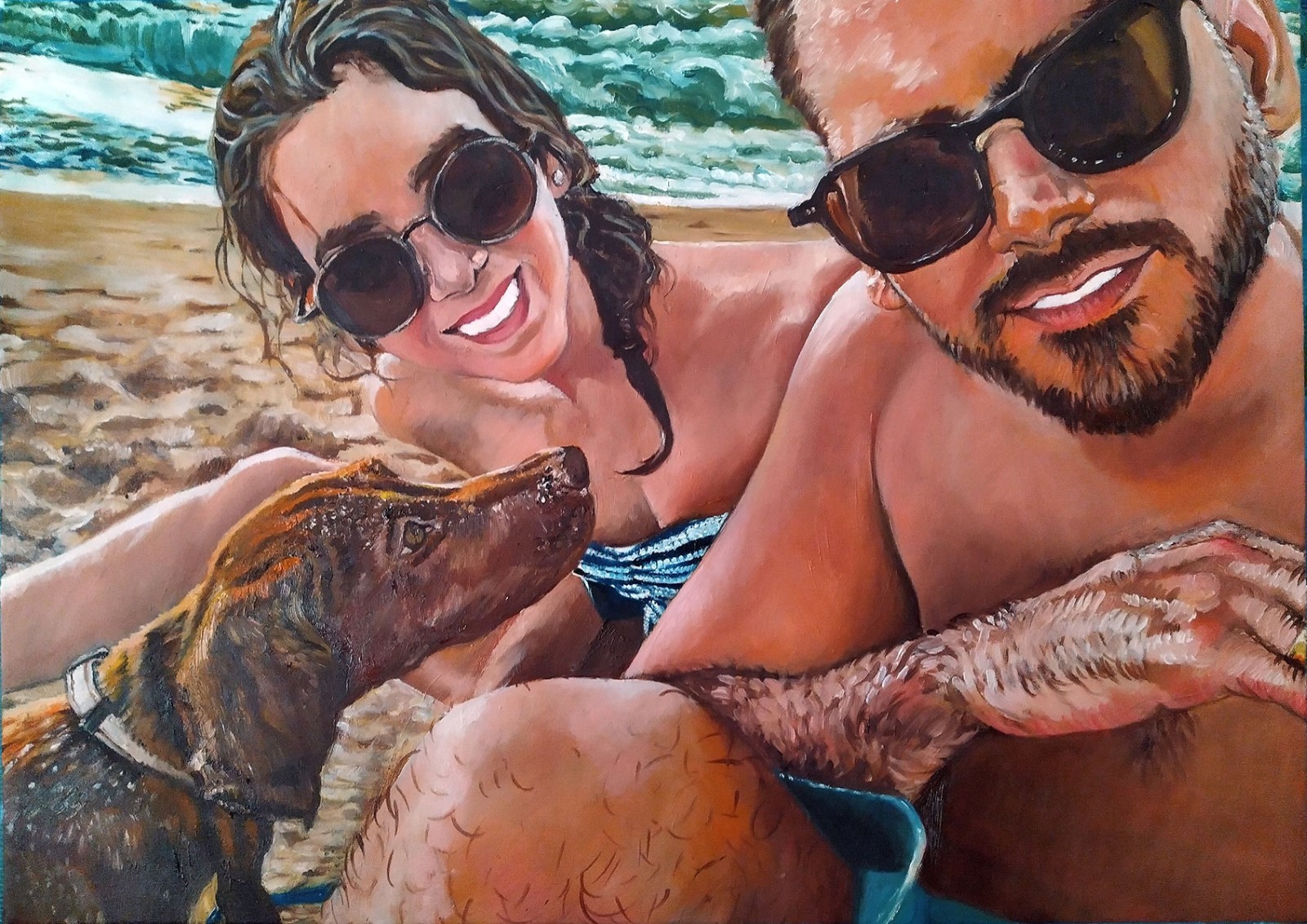
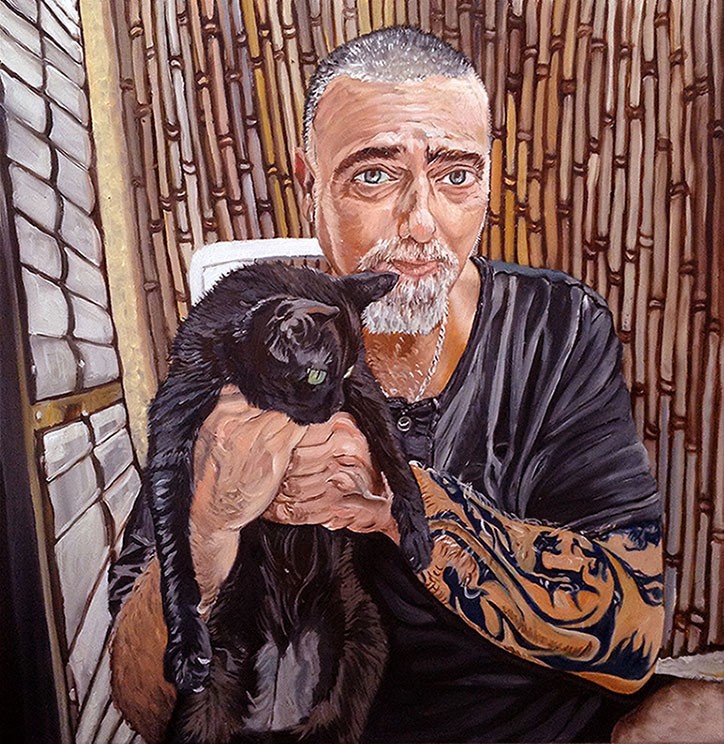
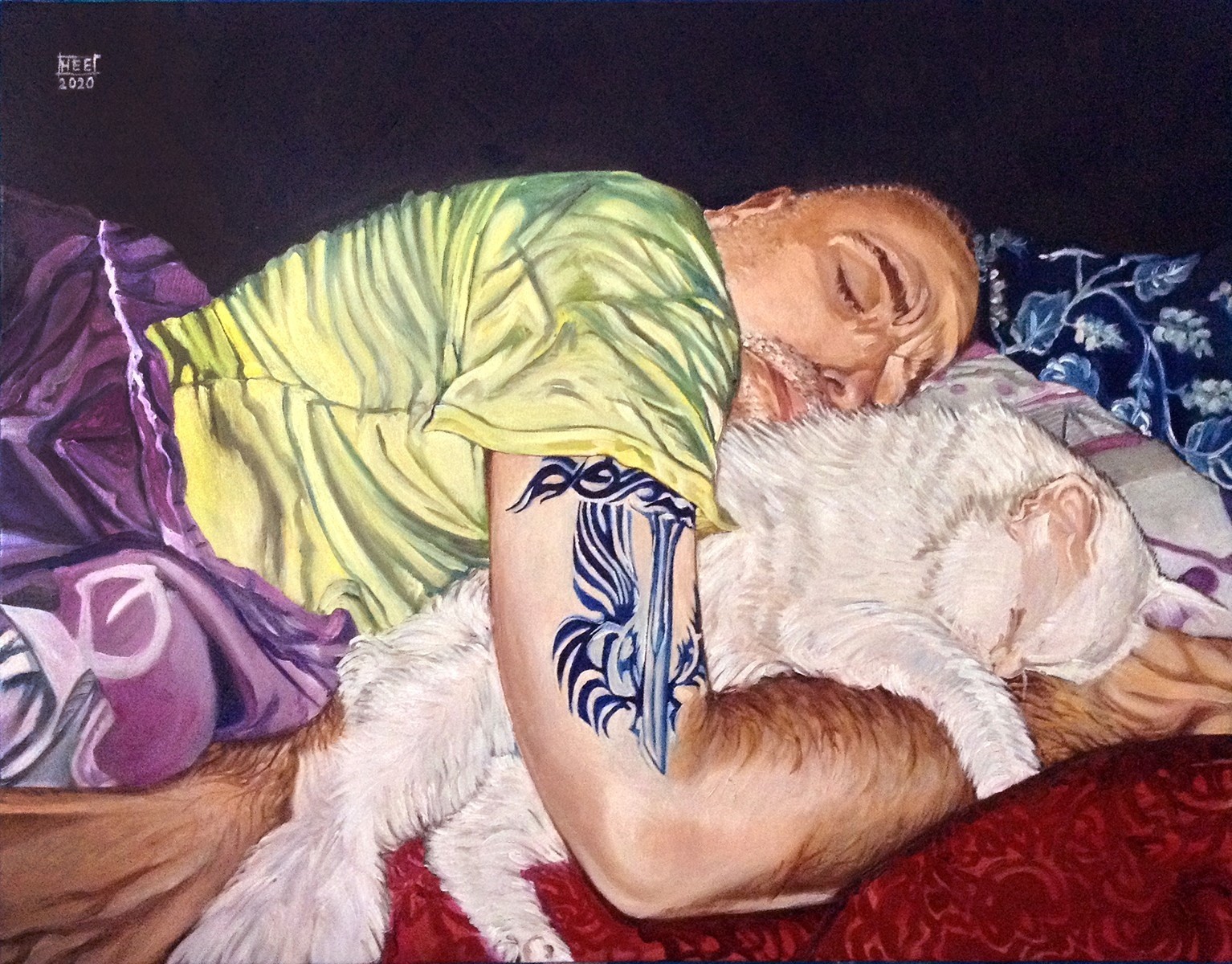
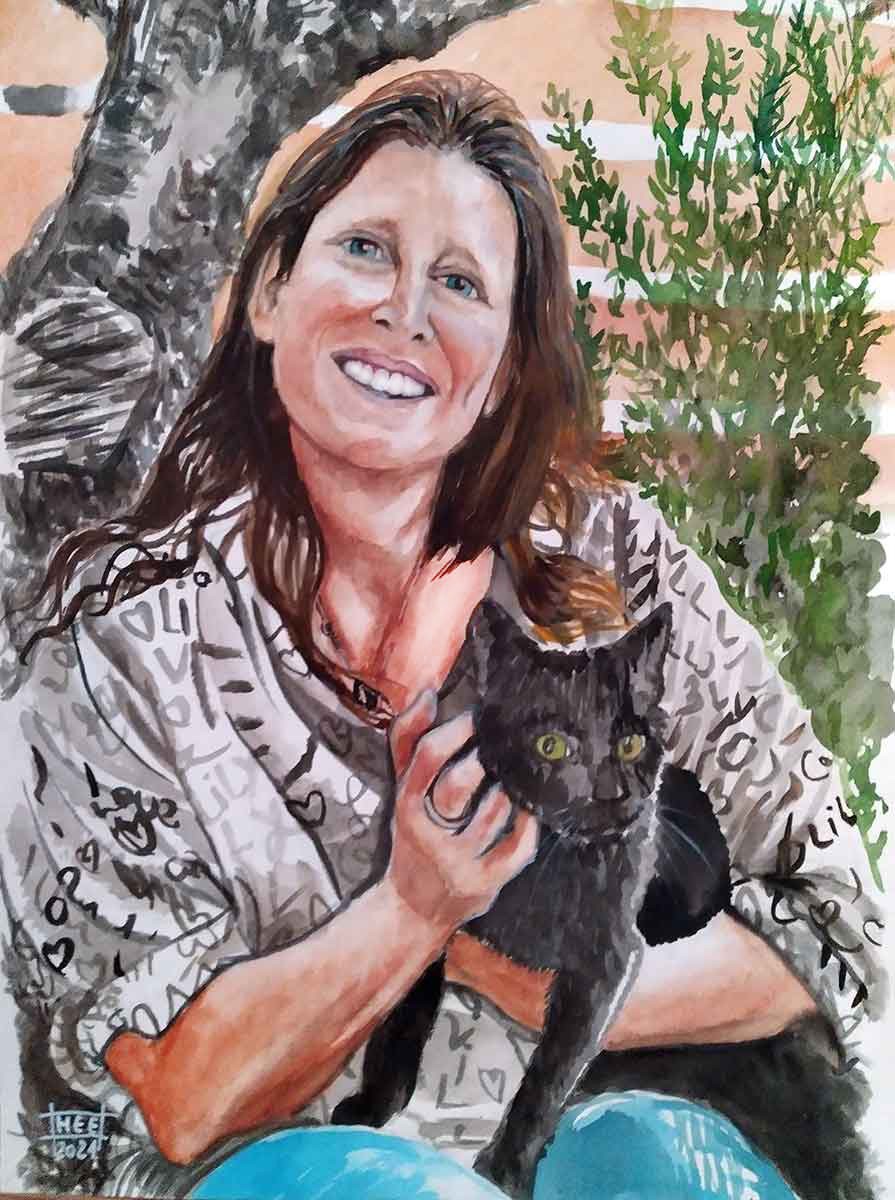
I have painted a woman holding a lamb, a sleeping man with a white cat asleep in his arm, a couple on the seashore with a dog between them, a woman holding a black cat under a tree. None of these paintings is a portrait of a person alone, and none is a portrait of an animal alone. All of them are portraits of a bond. You can see them all in my portrait gallery.
Twenty-four centuries have passed since the Athenian stele. The request has barely changed: that the figure stay in its place. That it not stand there alone. A phone is full of photographs that will vanish among thousands of files. A commissioned portrait painting hangs on a wall and becomes part of the house.
Is there someone in your home who walks on four legs? If you would like that bond to be seen as it truly is, I would be glad to do it for you.