


Design, Art and airB&Bee... Magical, Moving Installations Within the Biriya Forest Restoration Project
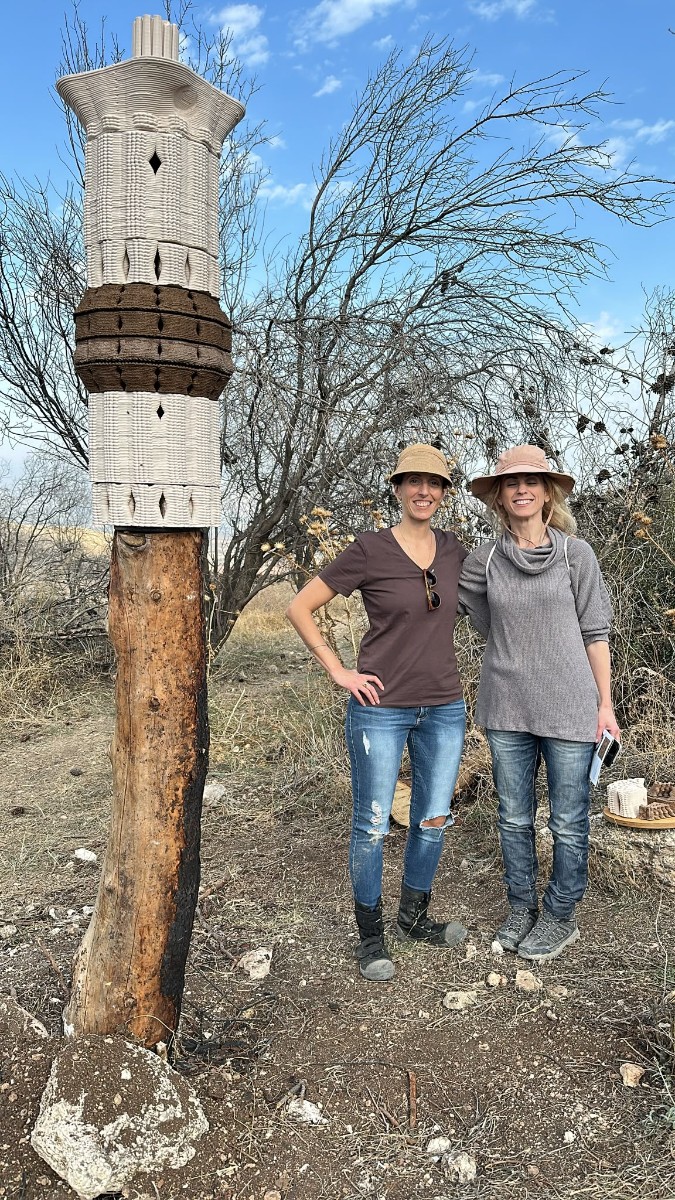
At the opening event of ForestArt, in late November 2026, I met Michal Levitzky, who created the sculpted habitat shown in this article's photo gallery. It is the result of fascinating research that brings design together with ecology. On a slope of Biriya Forest that went up in flames, other artists used materials found on the spot after the fire and the ravages of war to create moving, magical installations. These installations are part of the forest's restoration project. For me, the connection between design and green planning is greater than the sum of its parts. This article is a short journey through environmental art: from the spiral Robert Smithson built in 1970 to a 3D-printed habitat that invites insects and birds to nest in a burned forest.
What Is ForestArt, and What Happened to Biriya Forest?
ForestArt is a project of art, community and science that sets out to restore a burned plot in Biriya Forest. Biriya Forest, the largest planted forest in the Galilee, has known fire before. During the Second Lebanon War, in 2006, it was struck by rockets fired from Lebanon, and some 2,000 dunams of the forest burned. The burned plots were restored with the help of volunteers from Israel and abroad. In June 2024, during the Swords of Iron war, the Galilee burned again. An interceptor missile exploded above the forest, and its fragments started fires in many places. A senior KKL-JNF official said at the time that eighteen years of investment had gone up in flames within two hours.
The project grew out of the devastation left by the fires and operates in partnership with KKL-JNF. Near the Chen Scenic Lookout, twelve site-specific works of art stand on a steep slope that was left bare of the forest canopy. The works are made, as far as possible, of materials from the forest, and most of them will decompose over time and nourish the soil. Lilach Tzafroni curated the project, and Yahel Porat, formerly KKL-JNF's chief ecologist, provided the scientific advice. The path that links the works began as a trail trodden by wild boars, jackals, porcupines, gazelles and cows. The autumn 2026 issue of the Hebrew-language journal "Ecology and Environment" reported that, in keeping with KKL-JNF's current policy, the project avoided forceful intervention such as felling and large-scale planting.
What Is Environmental Art?
Environmental art, as defined in Tate's glossary of art terms, is art that engages with social and political questions concerning the natural and the urban environment. The glossary adds that it frequently takes the form of an installation. The term has been in use since the late 1960s, and it is often closely bound up with land art, which is made within the landscape itself: artists sculpt the ground into earthworks, or build structures in the landscape from natural materials such as rocks and twigs. Land art belonged to the broader conceptual art movement of the 1960s and 1970s. Tate names Robert Smithson's "Spiral Jetty," from 1970, as the best-known land art work. It was built out from the shore of the Great Salt Lake in the United States.
Smithson built a counterclockwise spiral from black basalt rocks, earth, salt crystals and water. According to the Getty, the spiral expresses his interest in entropy and destruction. In Biriya Forest, a tribute to it is being planted: in the work "The Tree Line," the artist Atar Geva is planting a spiral of trees in an area that burned completely. New trees are planted along the lines of the spiral, while the passages between them are left untouched, subject to the forest's natural forces of recovery. Over time, this will test two forestry approaches: planting a new forest right away, or letting the forest recover on its own.
Which Art Projects Around the World Resemble ForestArt?
Three projects from around the world are close to it in spirit: they planted trees or built nests as part of the work itself. In 1982, in Kassel, Germany, Joseph Beuys began "7000 Oaks", a five-year undertaking to plant 7,000 trees. According to Tate, it prompted many questions about urban planning, about the environment's future and about social structures. In the 1970s, Beuys developed the idea of "social sculpture": since everything is art, there is an artist in every person. Agnes Denes's "Tree Mountain" also began in 1982. It was inaugurated on June 14, 1996, near Ylöjärvi in Finland. The central idea was to reshape a former gravel pit. More than 10,000 pine trees are planted there, following a mathematical formula that combines the golden ratio with a pineapple pattern. Every tree is dedicated to a specific person. "Tree Mountain" is to remain under protection for centuries.
More recently, after the 2021 fires in Sardinia, the artistic and social initiative Resilient Woods was born. Giant nests were built from the burned wood that was collected, and they were set up along a new mountain trail.
What Is a 3D-Printed Habitat, and Why a Dead Tree?
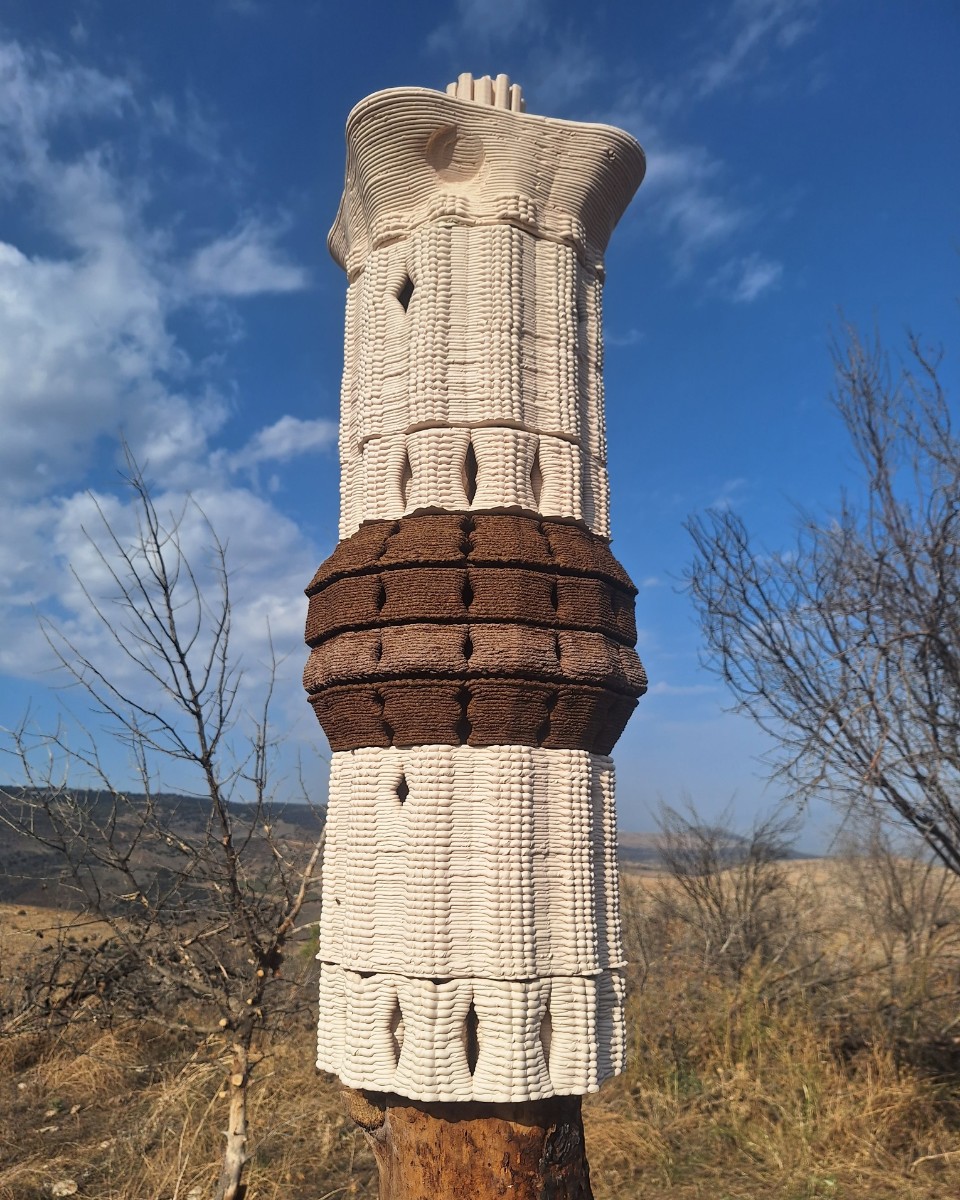
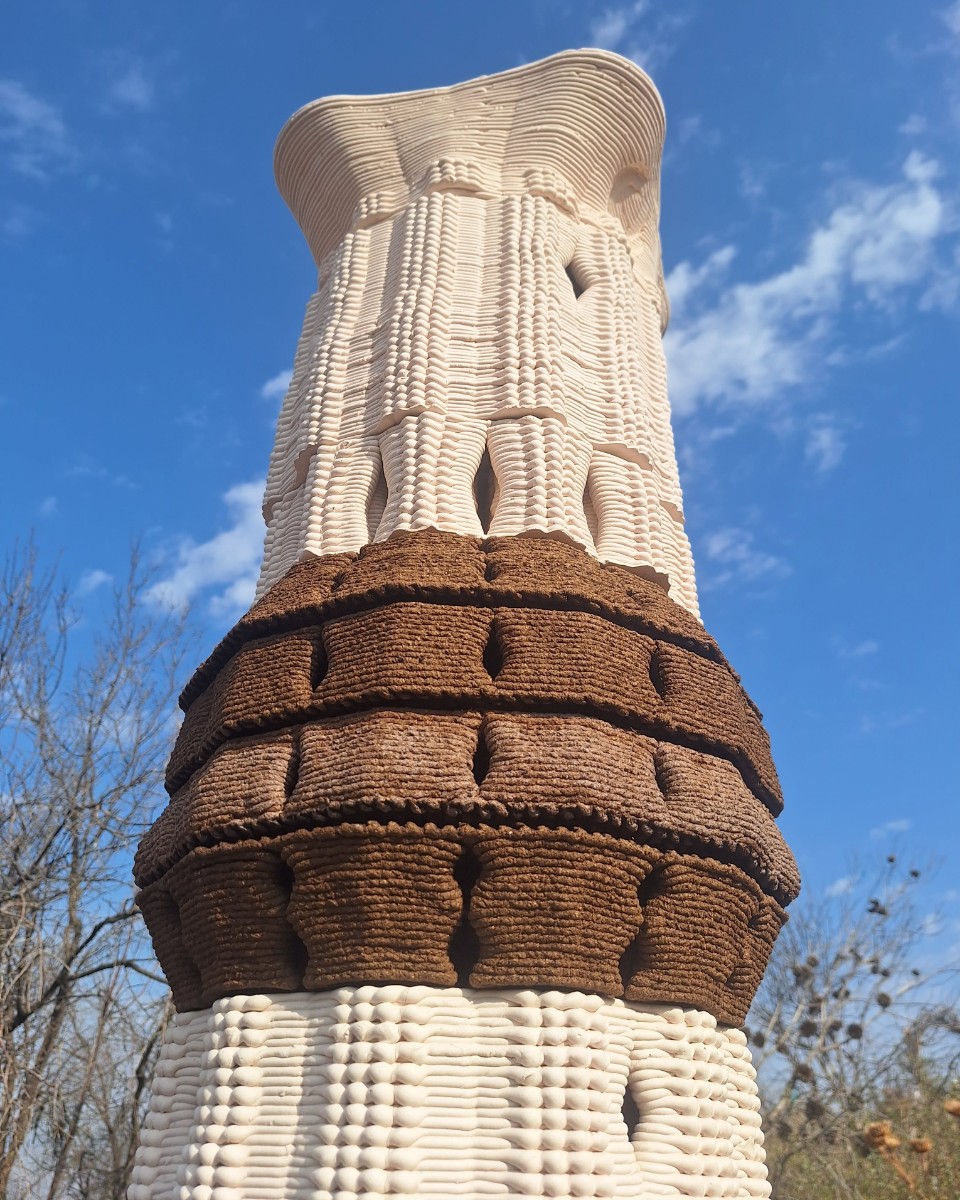
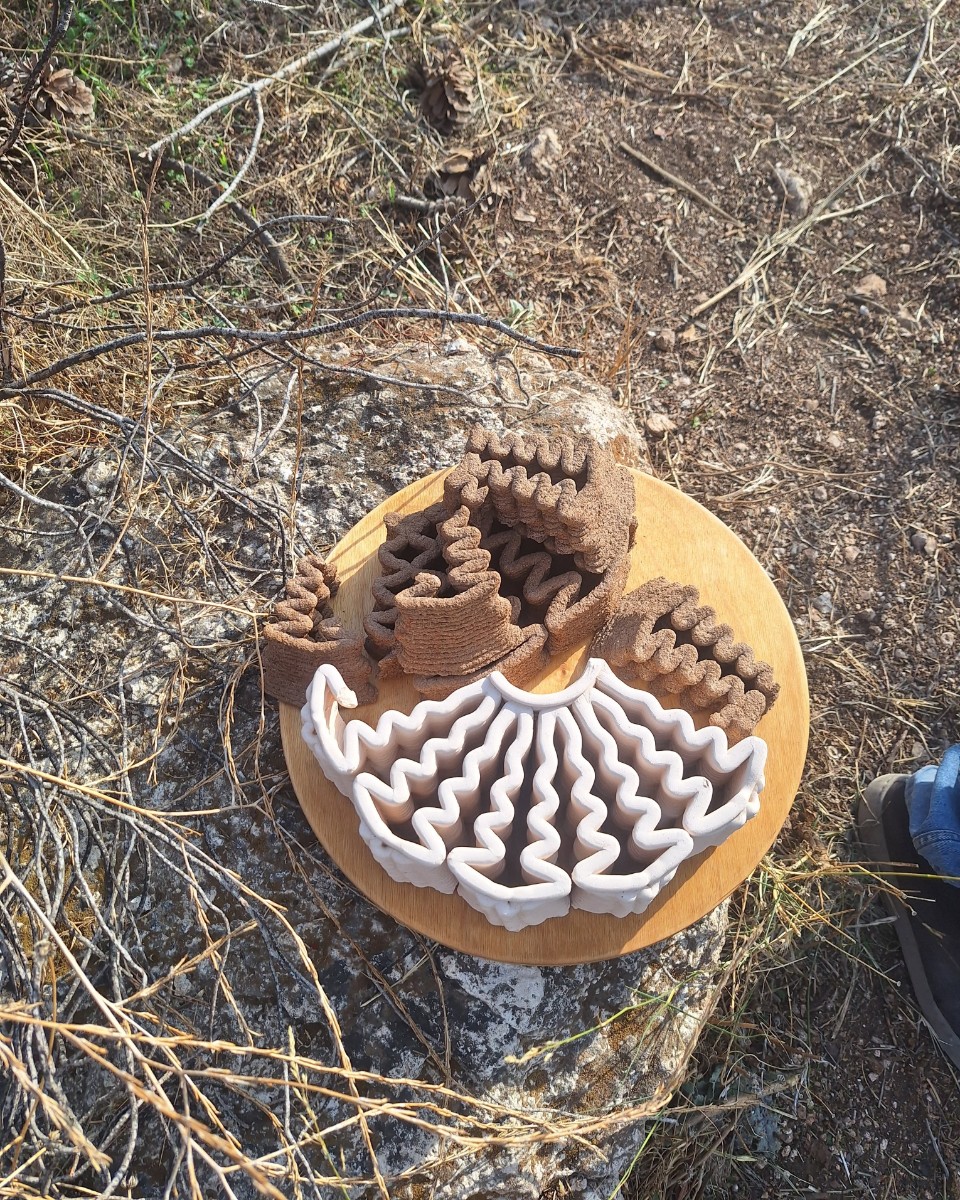
A 3D-printed habitat, as Michal Levitzky develops it, is an artificial structure made of natural materials that recreates the ecological functions of a dead tree. Michal Levitzky's research, supervised by Shany Barath and Daniel Metcalfe, is meant to support biodiversity in cities. Dead trees offer shelter, nesting sites and food to many species, but urbanization and the loss of habitats have considerably reduced their presence. In cities, they are often cleared away for reasons of safety or aesthetics. The study drew on four field interviews: with a forest-management ecologist, an entomologist, an agronomist and a herpetologist. The interviews yielded six key features that turn a dead tree into a habitat: "cavities, holes, ledges, textures, side entrances and separation gaps."
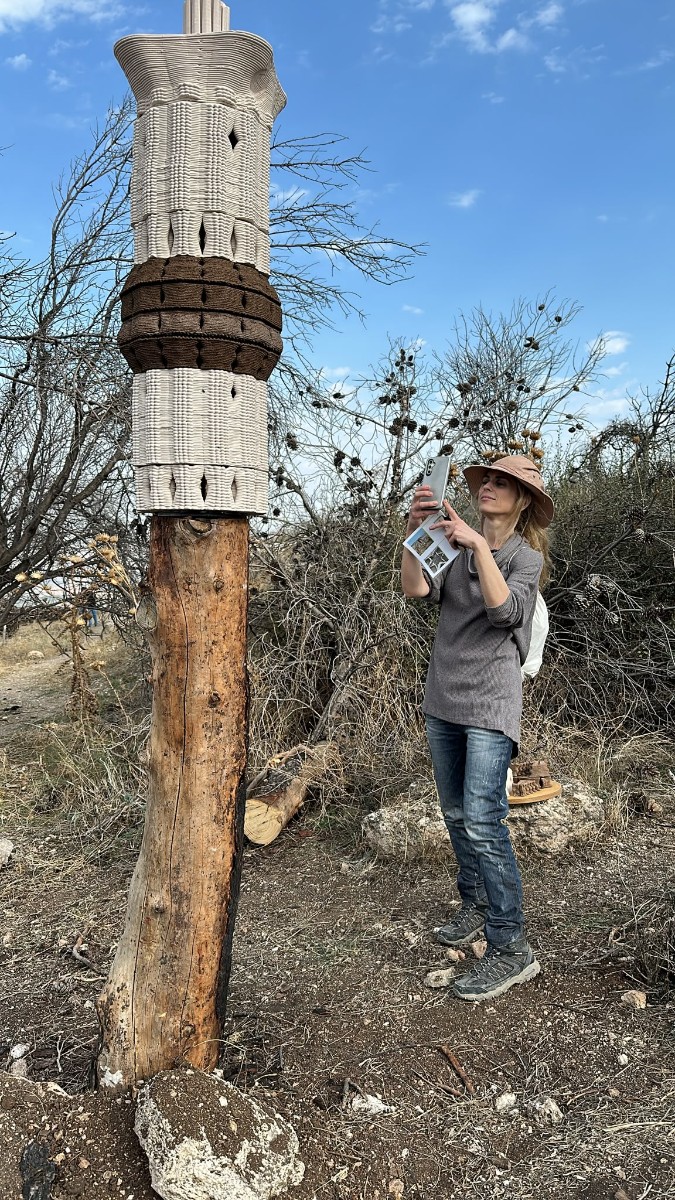
These insights became a modular system, printed from ceramics and wood-based materials. The wooden components are designed to break down before the ceramic ones. Like a dead tree in nature, the habitat changes over time and makes room for a succession of species. According to the Technion lab, the research seeks to design a process rather than a finished object: to work with nature and its constant change, not against it. In Biriya Forest stands SILVA #2, a follow-up work to the research. At its center rises a burned tree trunk on which rest modular segments, 3D-printed from clay and from materials based on wood waste. Above the trunk, a kind of artificial canopy takes shape, inviting insects and birds to nest in it. The work is not designed for species defined in advance. It stands in the forest as a totem named SILVA, Latin for forest.
airB&Bee: What Are Insect Hotels?
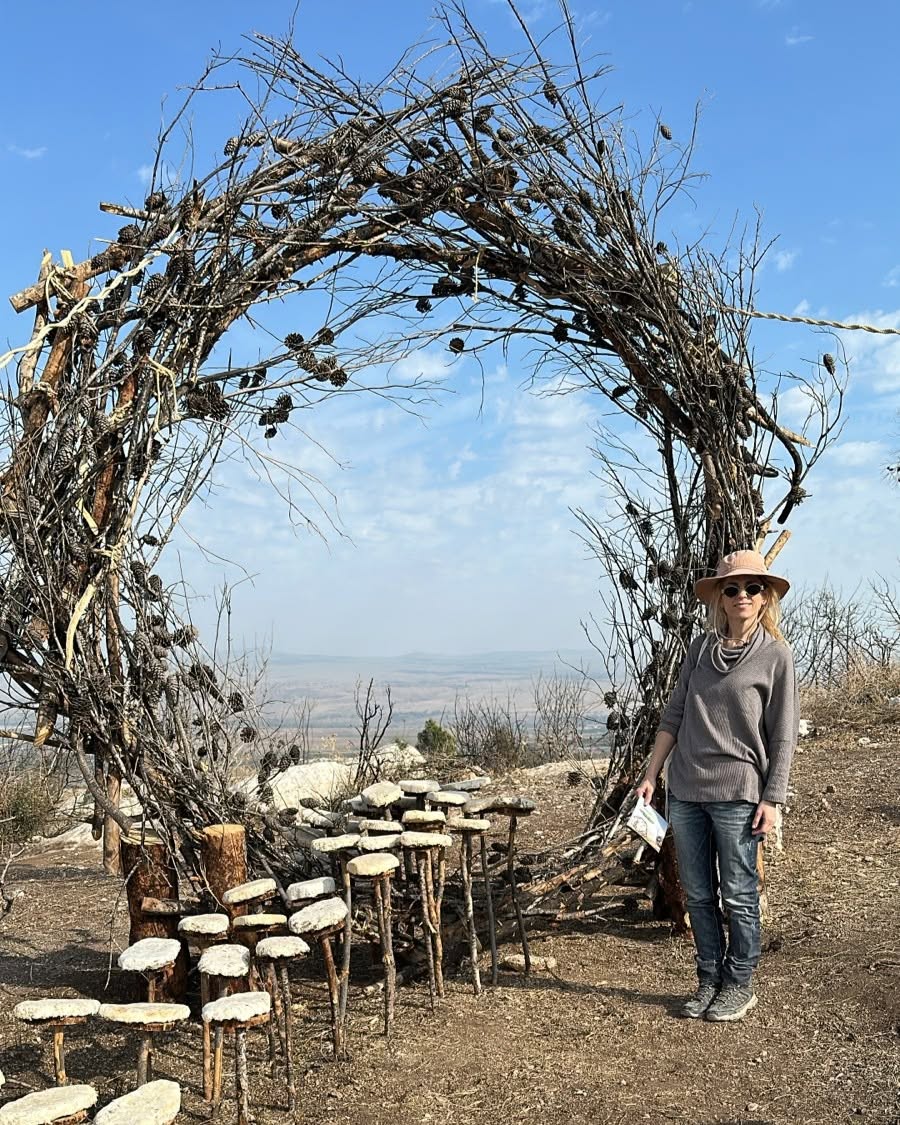
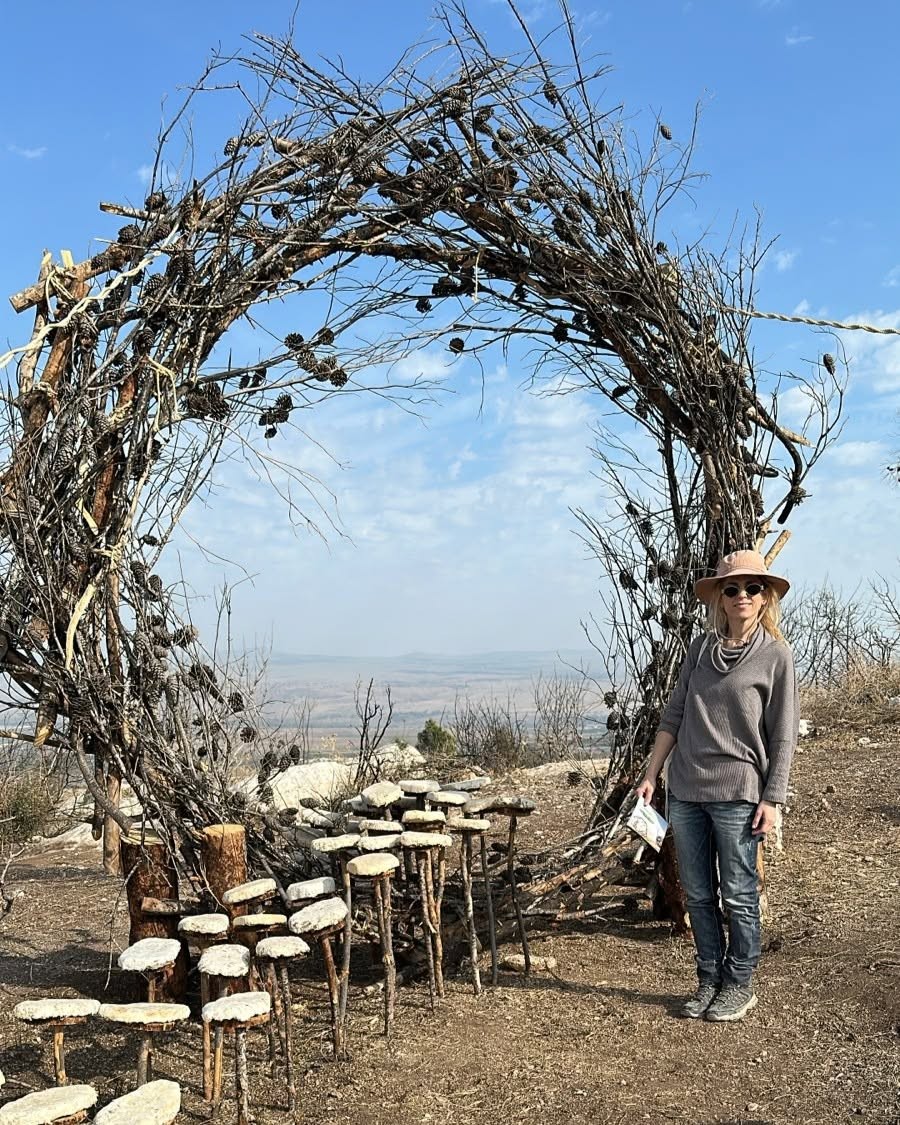
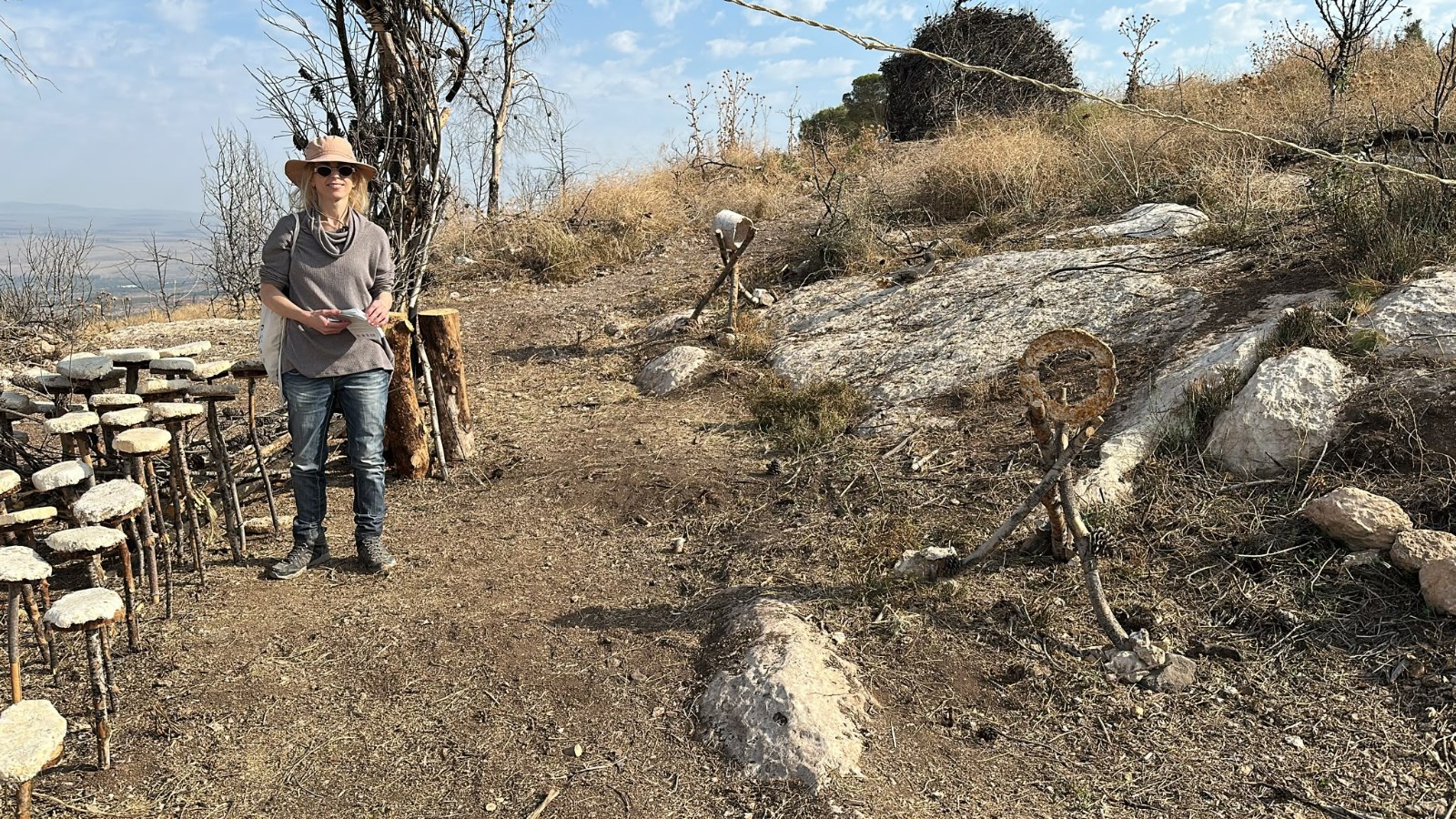
At ForestArt, insect hotels are cylinders made of fungal mycelium that shelter insects and invite life back to nest in the forest. They are scattered around "Gate," a work by Motek Design Lab Studio: Yehuda Bar, Yoav Konikov and Nofar Lifshitz. The gate itself is a circular weave of wood gathered in the forest, echoing a geometric bird's nest. A path of mycelium "stones" leads the eye through the gate to the Galilee landscape. The mycelium, the network of threads of three local fungal species, was grown by the creators in a laboratory on a substrate of burned pine wood from the forest.
Liat Danieli, too, is building a true airB&Bee in her work "Kina": a home for pollinators and birds inspired by the columbarium. The columbarium is the ancient dovecote. In the Roman world, its niches also held urns containing the ashes of the dead. The work joins nesting (kinun in Hebrew), the making of life, with lament (kina) over death. The lower story is built of bricks made from local soil, perforated for pollinators to nest in. The upper stories are to be made of nesting jars, meant to bring titmice and hoopoes back to the forest. In the spring, when the pollinators become active again, Danieli will hold a fire ceremony inside the structure. The heat of the fire will make it resistant to dissolving. In this way, the fire that consumed the forest will immunize the house against decay.
Can Art Help a Forest Recover?
That is exactly the question ForestArt is testing on the ground. The works highlight principles of restoration: harvesting runoff water, preventing soil erosion, encouraging the regrowth of fungi and native plants, supporting selected trees that survived, and restoring shelters and breeding sites for animals. Cattle grazing has been suspended on the plot for several years, to encourage the vegetation to regenerate. The Israel Center for Citizen Science lists, among its projects in the north, long-term ecological monitoring of the plot, led by the Northern Front association for the promotion of art in the Galilee and by KKL-JNF. With the help of the communities living near the forest, the monitoring will examine how the ecological artworks affect the recovery of biodiversity in the plot. The coming years will give the answer.
What Is the Connection Between Design and Ecology?
Design and ecology meet when planning takes the needs of animals into account from the very start. In 2015, Wolfgang Weisser of the Technical University of Munich and Thomas Hauck of the University of Kassel presented Animal-Aided Design, an approach that does exactly this in urban planning. In their view, it can generate entirely new ideas for planning space, such as a "night park" for nightingales and bats in Berlin. In the paper by Levitzky, Metcalfe and Barath, the habitat also serves as an educational platform that presents new ways to improve coexistence between species in shared spaces.
Admiration for animals as designers is far older. In 1859, Charles Darwin wrote in "On the Origin of Species": "He must be a dull man who can examine the exquisite structure of a comb, so beautifully adapted to its end, without enthusiastic admiration." Mathematicians, he added, report that bees have in effect solved a difficult problem: their cells are built to hold as much honey as possible while using as little wax as possible.
That Is Where I Want to Live and Work
A University of Haifa graduate with a master's degree in art history, I paint portraits of people and of animals. In 2019, I also took part in a field exhibition with a mixed-media sculpture. In the work "Forest Guardians," at the end of the trail in Biriya, Gil Becher appears as a "forest shaman." I have written here before about the artist as a shaman, and also about a "Portrait of Another Species", one made from alternative materials. I am vegan, I love animals and I believe in their liberation.
It is in the connection between design and green planning that I want to live and work. Green building is here to stay and to create a future of coexistence. In my next article, I will write about the need to put down the brush and let words speak.