


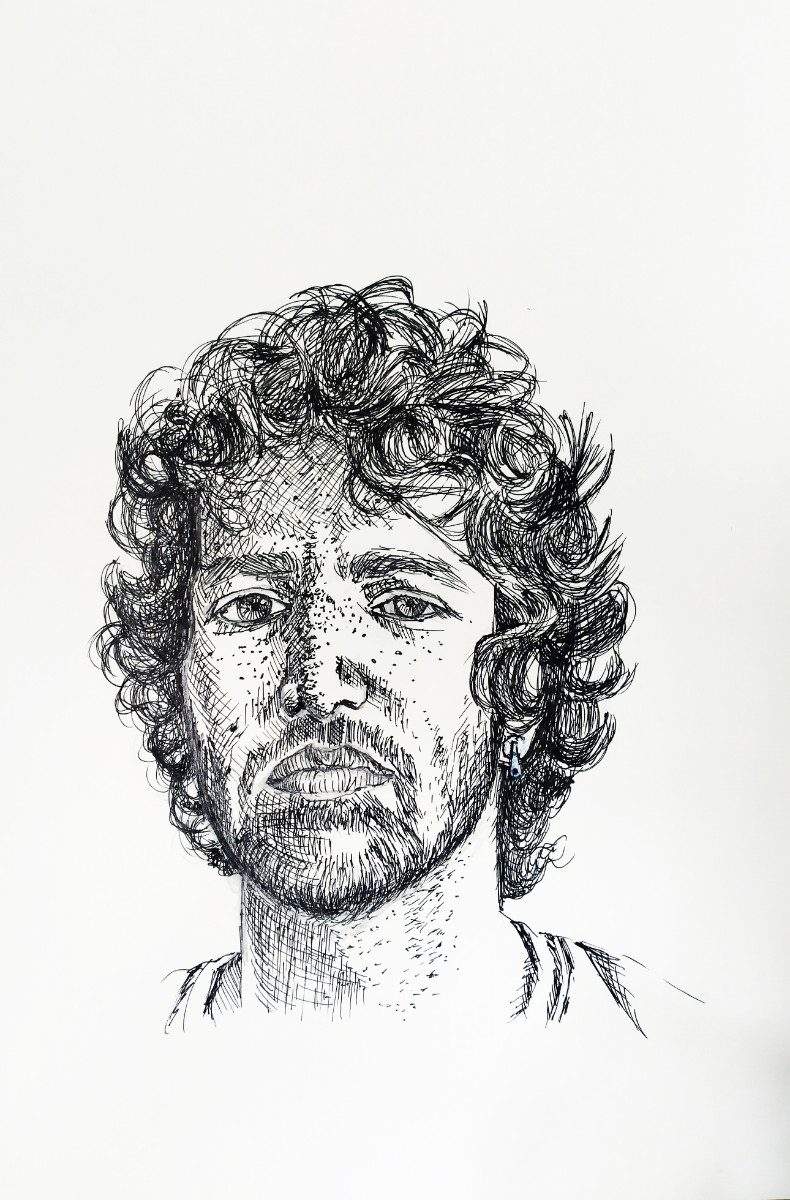
Portrait Drawing in Pencil, Charcoal or Ink / Three Different Choices on the Same Paper
Pencil, charcoal and ink look like three degrees of the same thing: light, medium, heavy. In practice they are three different techniques. The choice between them is made before I begin the portrait drawing. I compare them in several respects: pencil and ink allow linear work, while charcoal is much more a matter of tone; pencil and charcoal can be erased from the paper, while ink is corrected by covering it. One thing is the same in all three — the paper I work on. I will come to it at the end.
Before anything else: I work from a photograph. Nobody has to sit for me. This matters in particular to anyone ordering a portrait of elderly parents. What I ask for is a sharp and clear photograph of the face. From a blurred photograph, or from one in which the face is a small part of a large picture, I can get fewer details.
Pencil allows fine linear work. A single hair separating from the curl, the end of an eyelash, the sharp border of the pupil — these are what pencil gives. A highlight comes mainly from the white of the paper in the empty spaces between the pencil marks. I build the skin tones in thin layers one over another, until they merge. In the eyes I work down to the small details — the glint in the eye, the edge of the eyelid. I draw the frame of the glasses, for example, in detail, and the reflection on the lenses in as much detail as the photograph shows. Graphite marks on paper often appear shiny in raking light; according to the Metropolitan Museum of Art this surface quality helps to distinguish a graphite drawing from one in black chalk. In pencil I can change every detail until the last moment.
I begin the charcoal drawing differently. Charcoal, according to the Metropolitan Museum of Art, is made from twigs of willow or vine that have been heated at a high temperature in an enclosed vessel without oxygen. The museum writes that the large particle size and the absence of a binder allow charcoal to be lifted easily from paper, and a highlight to be created in that way. This is how I work: I cover the sheet with a layer of charcoal; instead of adding highlights I take away a spot of shadow. According to the museum, the medium is prized for the interplay between light and shadow that it produces — chiaroscuro. In a charcoal portrait drawing of an adult face I widen and soften the transition on the cheek, and I build white hair from fine lines and a great deal of white paper. In the eyes I make the pupil from a dark spot with a white glint of clean paper inside it; that is how they gain depth. In charcoal every detail can be changed until it is fixed with fixative spray.
See the portrait drawings in pencil, charcoal and ink in the gallery
A portrait in ink can be made in more than one way. The Metropolitan Museum of Art notes that ink may be applied with a pen or a brush, to achieve either linear or tonal effects, and that inks may be diluted to produce lighter washes. With a pen I build the tone out of the line itself, and I do not produce soft transitions. I build the shading of the skin from a mesh of lines. I mark white hair by the absence of a line — the empty paper between the shadows is the hair. In the eyes I sharpen the line. With a brush the ink can be laid down as tone. If what matters to you in a portrait is softness, pencil and charcoal give that more than the pen does. Working in ink, I weigh every line and every mass before it is put down.
A few words about me and about the way I work: I am Hee-Lee Soffer, a painter and an illustrator. I work in these three materials. If you are not sure, mark "Not sure" on the order form instead of pencil, charcoal or ink. In that case we talk about the drawing before I begin. You can ask me to send you photos of the work stages while the drawing is in progress. At the end I will in any case send you a photo of the finished drawing, before it goes out to you. At this stage you can request adjustments and corrections, in all three materials, to your complete satisfaction. In a charcoal drawing this photo is sent before the fixative is applied, while there is still room to make corrections; I apply the fixative only after you have given your final approval. The price depends on the size and on the number of figures in the drawing; the price list is open for you to view.
Prices, sizes and working time for ordering a portrait drawing - click here
One detail is the same in all three techniques: the paper. What I ask of you is one thing — not to clean the drawing at home, in any of the three materials, and not to touch the surface of the drawing at all. The charcoal drawing reaches you fixed with a dedicated fixative; the request applies to it as well. The Canadian Conservation Institute lists charcoal and soft graphite among the friable media, that is, those that are not well bound to the paper: there is little or no binder in them, and their adhesion to paper is tenuous. I work with a series of soft pencils; that is why I ask the same for the pencil drawings. NEDCC, the Northeast Document Conservation Center, adds that works of art in any media that are not firmly bound to paper might be smeared by cleaning, or the media removed. Often, it writes, these friable materials cannot withstand surface cleaning at all.
Works in these techniques are best framed under glazing. The Canadian Conservation Institute writes that plastic glazing readily picks up and holds an electrostatic charge. On the outside the plastic attracts and holds dust; on the inside the charge can lift particles from the image of friable media such as charcoal. Glass picks up very little charge, and the Institute therefore recommends it for all friable media. For charcoal and pencil drawings I recommend asking for glass. I also advise a mat, so that the paper does not touch the glass. About the mat board it is worth asking what it is made of rather than whether it is acid-free: writing about storage enclosures, NEDCC notes that there are no standards governing the use of the terms "archival" and "acid-free". The same center recommends 100% cotton rag board for matting works on paper.
Before hanging the drawing on the wall, it is worth knowing one detail that matters to the survival of the work: the Canadian Conservation Institute notes that charcoal and graphite do not fade even in direct sunshine. But the paper substrate — which the Institute deems to be in the low-sensitivity category — would be affected by such high light intensity. The paper is shared by all three materials, and so in all three I recommend hanging the drawing on a wall that does not get direct sun.
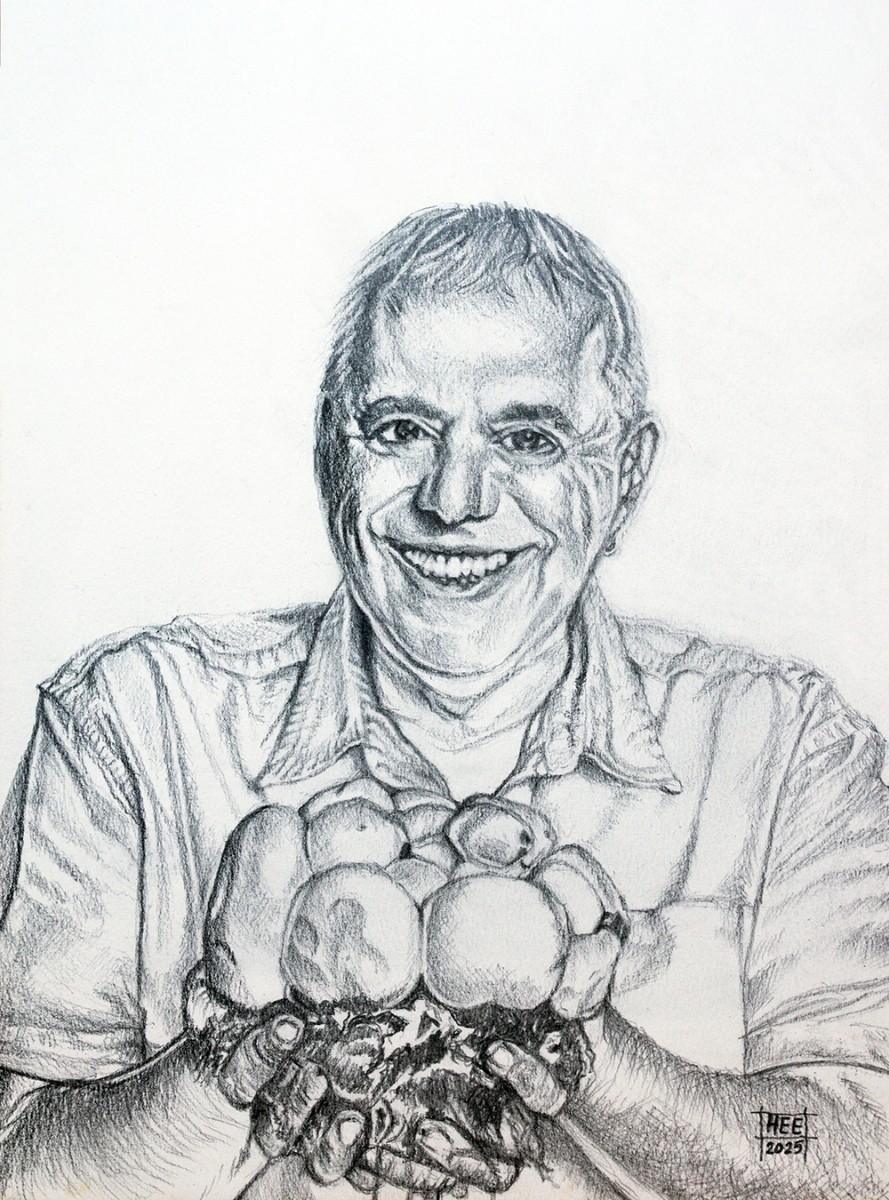
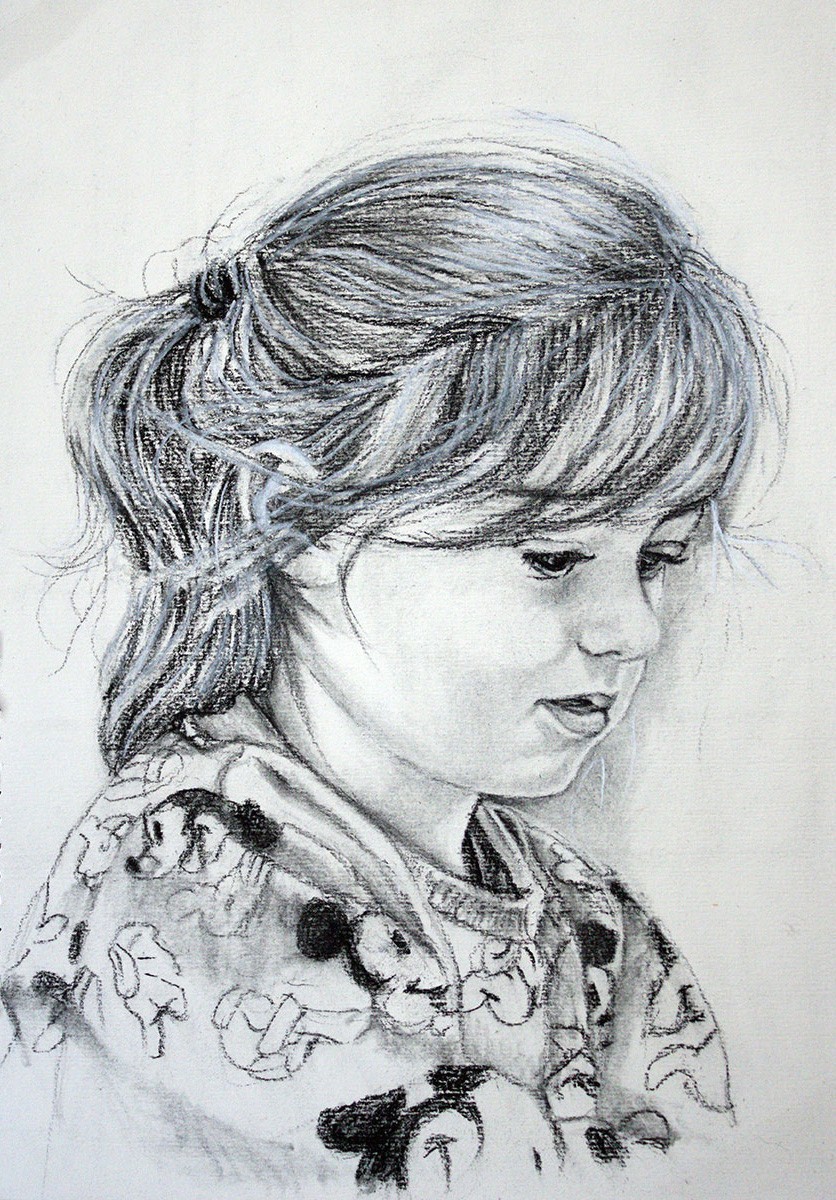
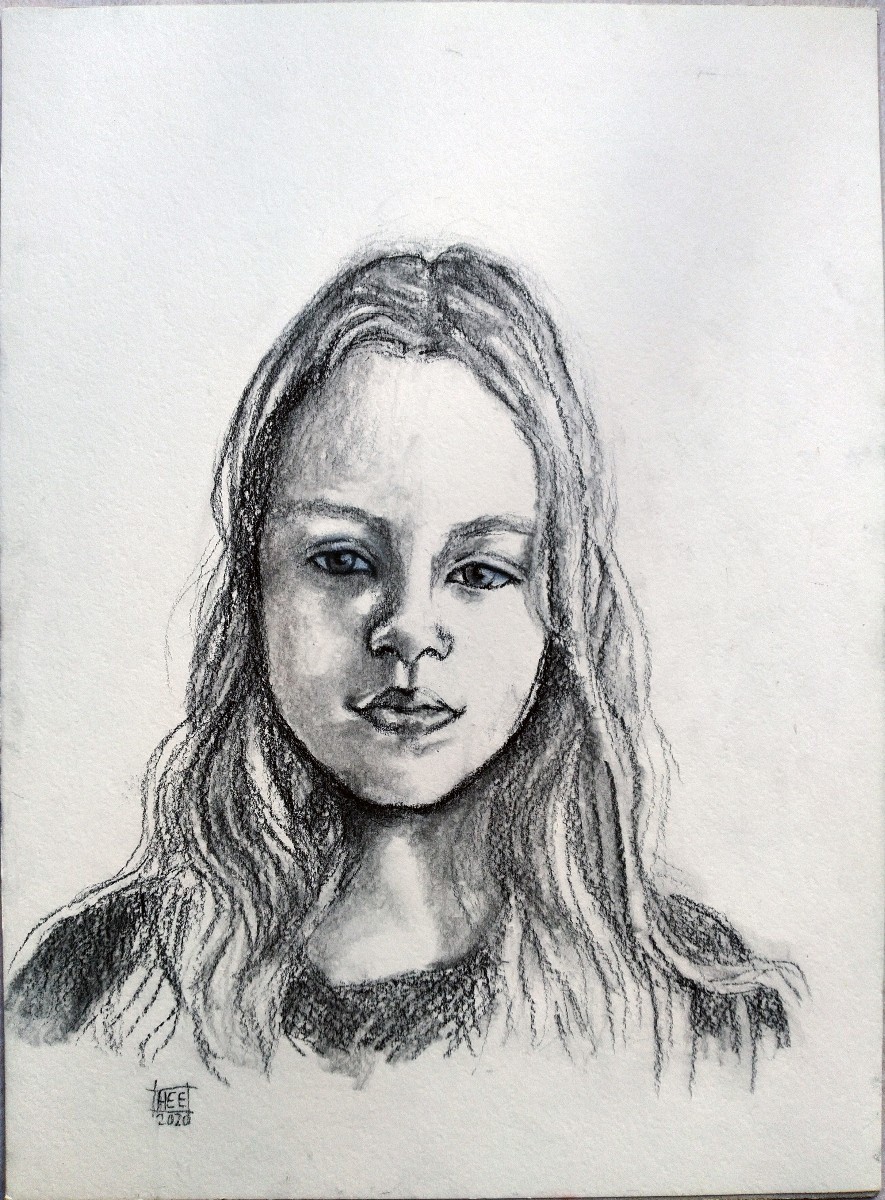
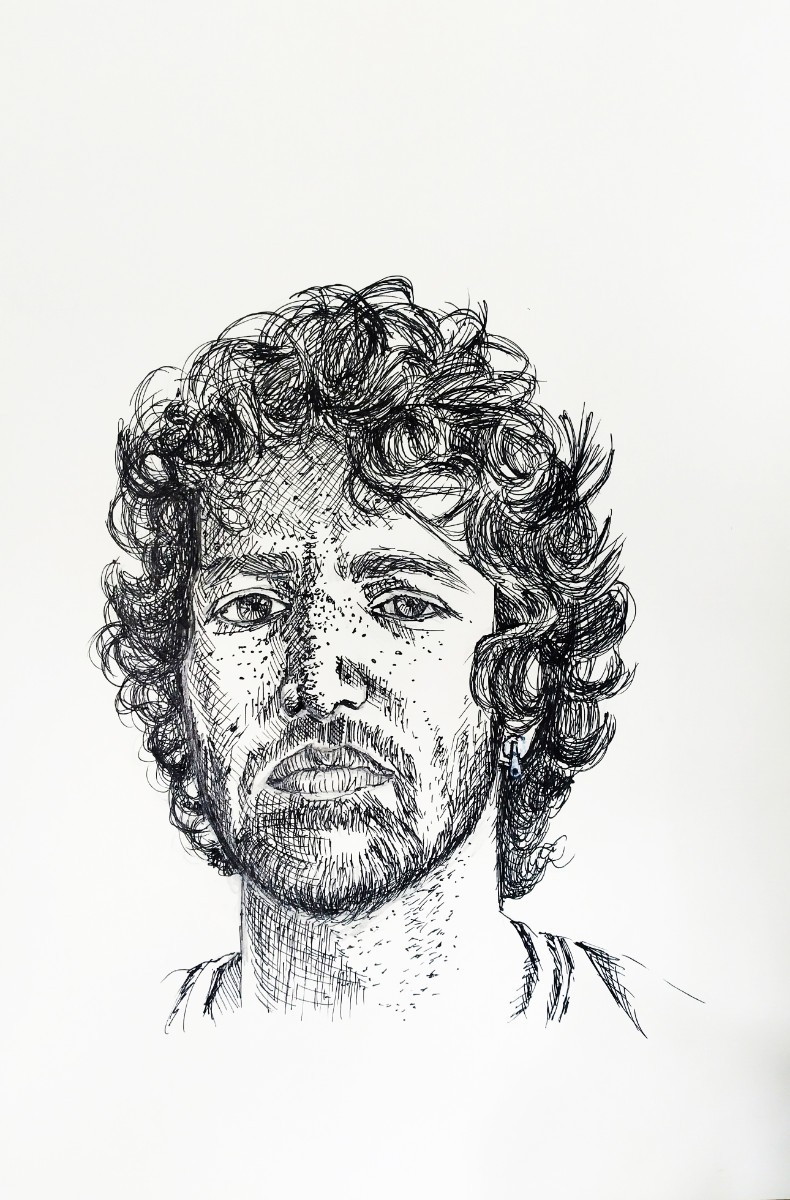
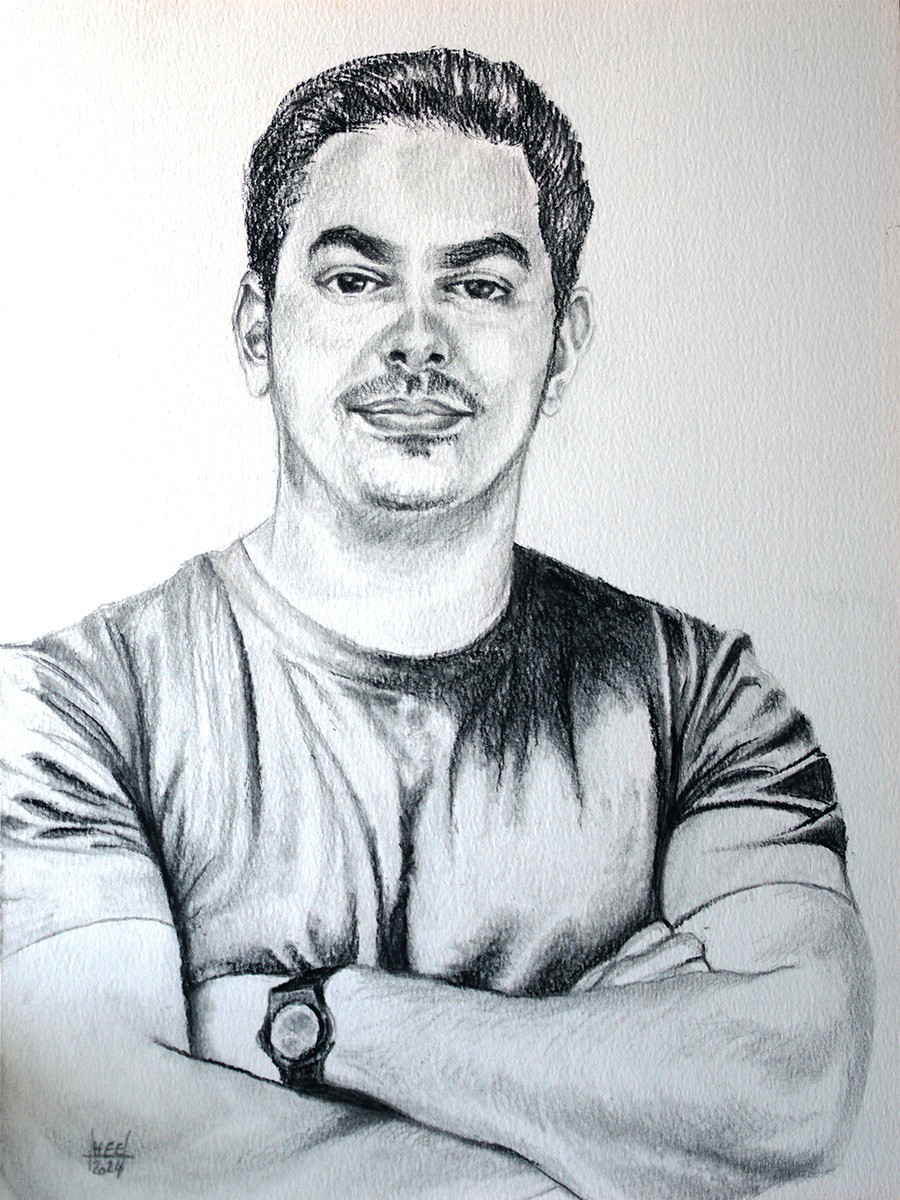
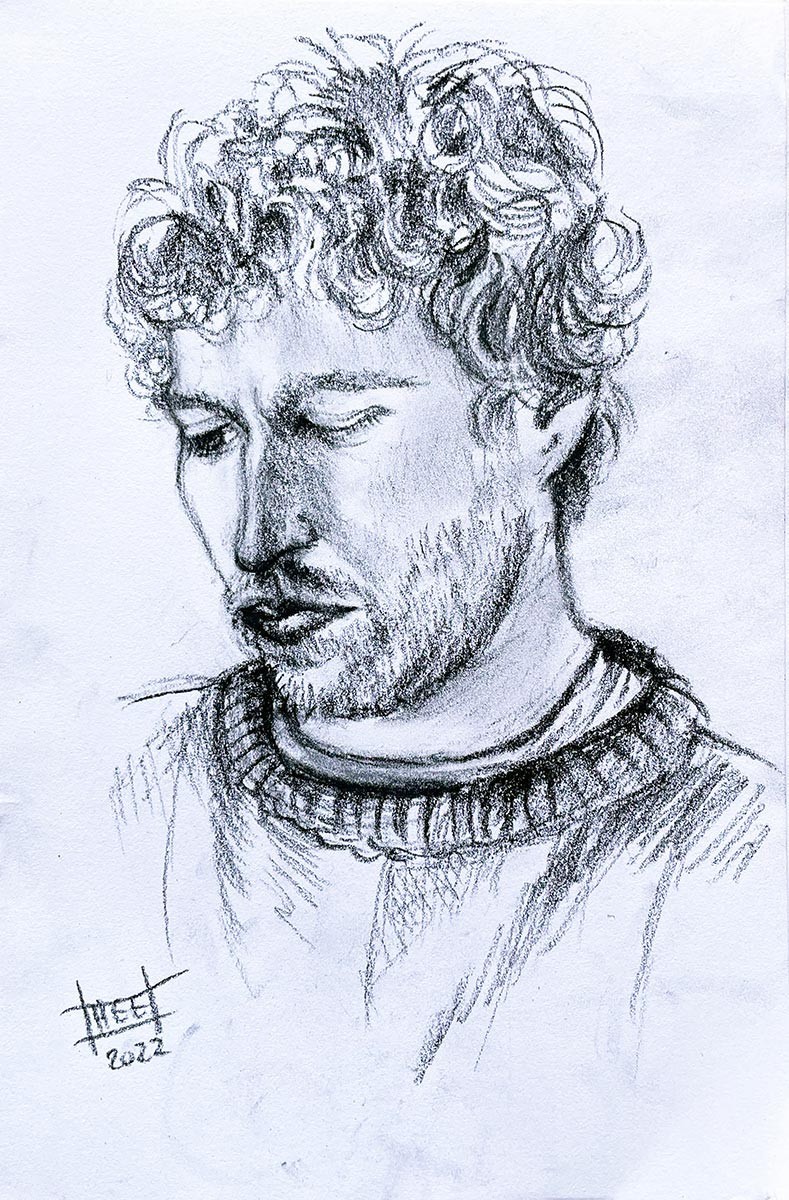
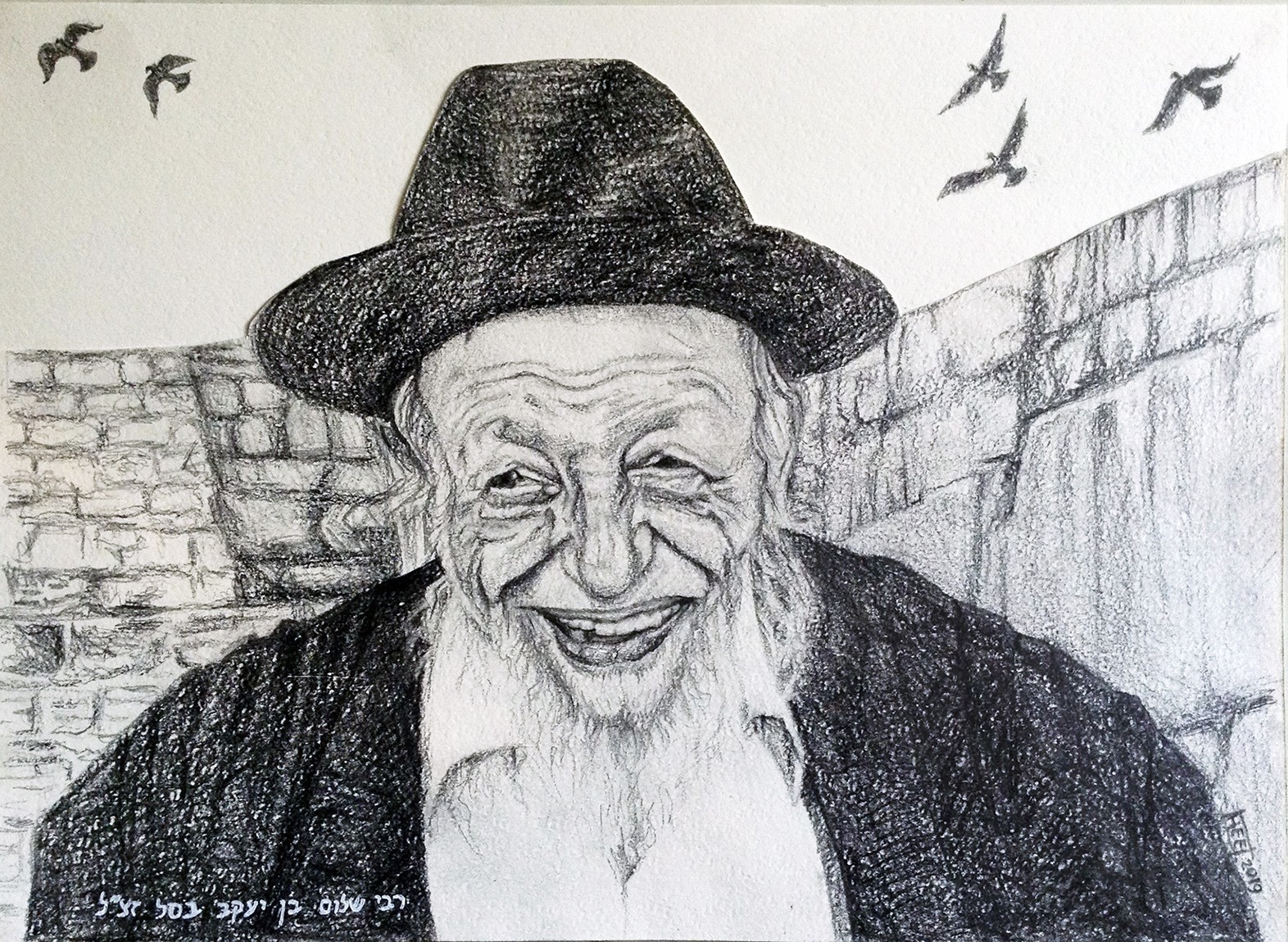
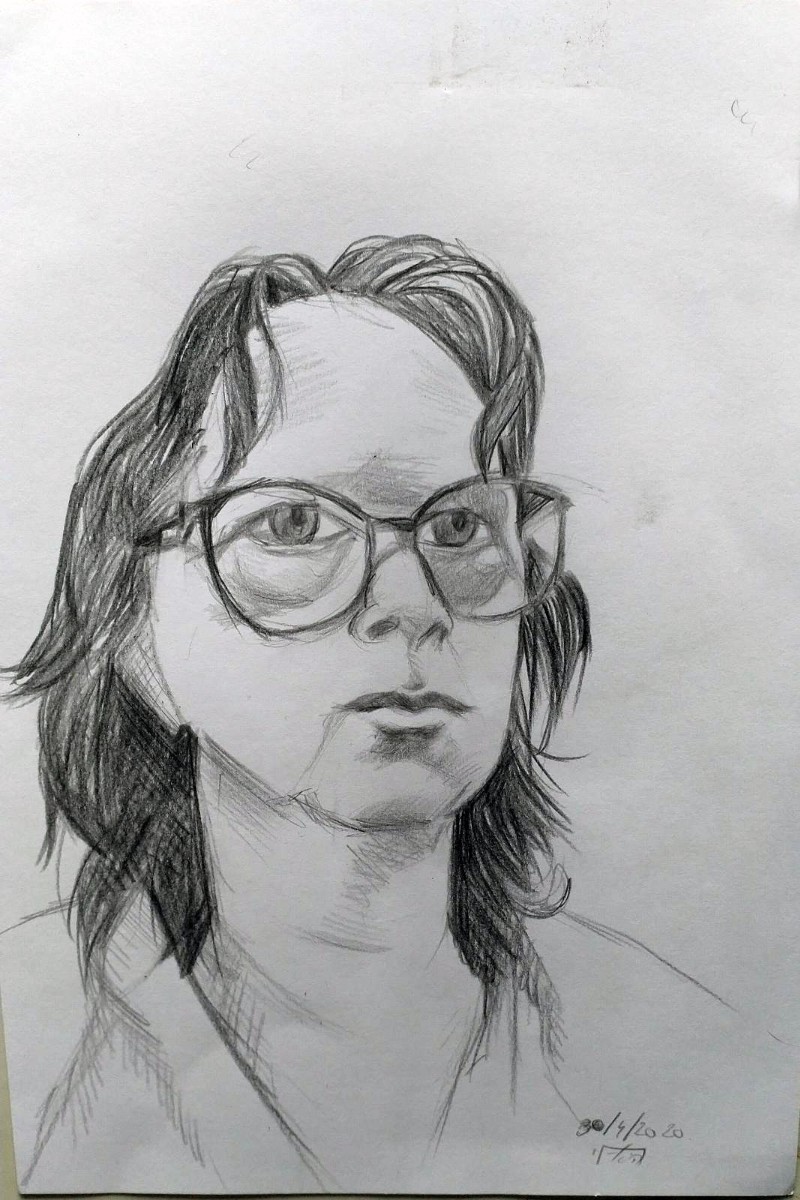
The decision between the three techniques sounds technical; in practice it shapes how the portrait looks. In one I describe the face hair by hair, in another I create it out of light and shadow, and in the third I build it from a mesh of lines. To my mind there is no right and wrong here. There is one question: which style moves you most? Because in the end art is the language of feeling, and that is where the answers are.
To order a portrait drawing in pencil, charcoal or ink - click here