


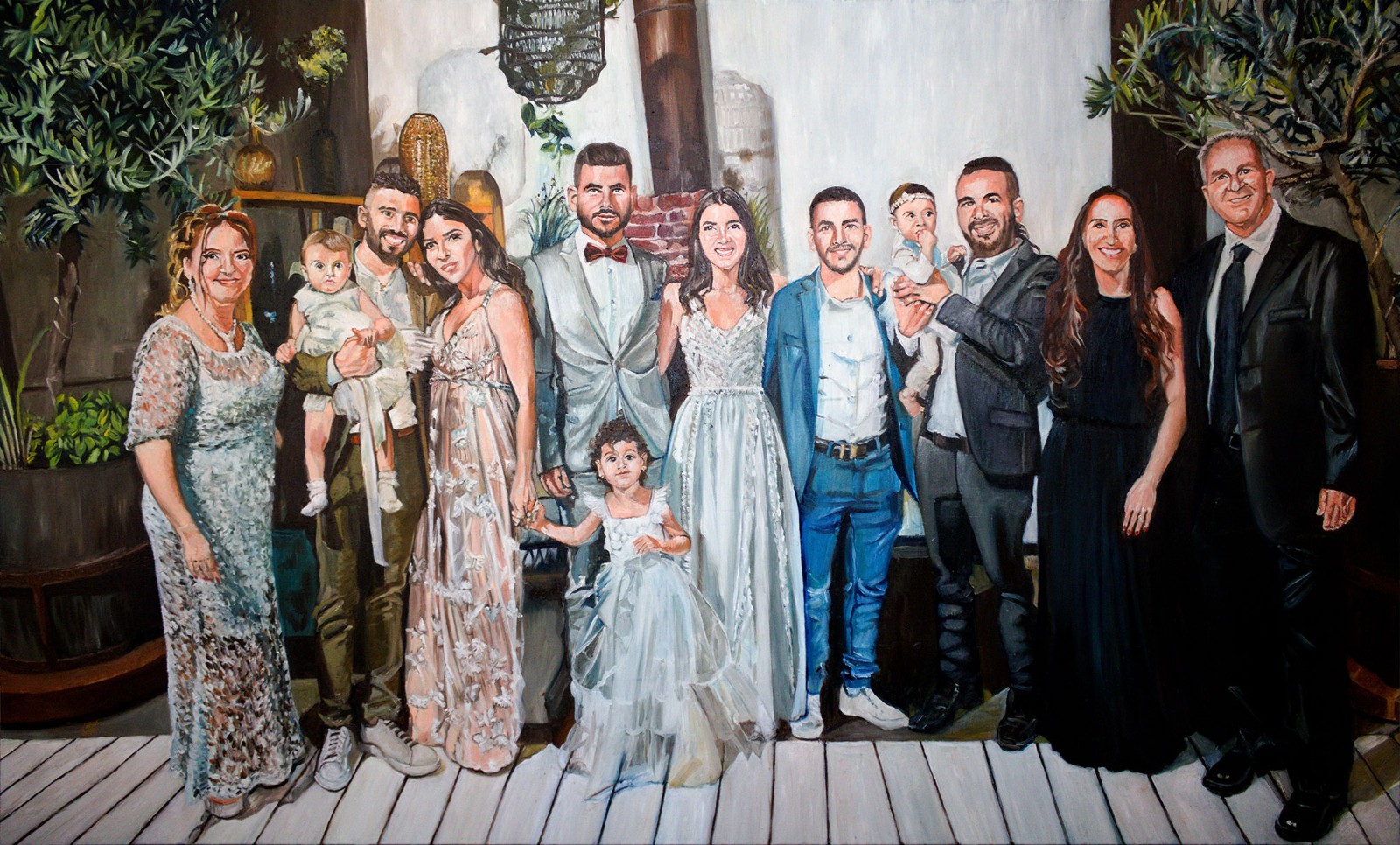
Family Portrait Painting: How the Family in the Picture Is Built
A family portrait painting is a single work in which several family members appear together. The difference between it and a family photograph lies not in the material it is made of but in what comes before it: the photograph captures an arrangement that existed, while the painting builds an arrangement that somebody decided upon. Three works from the collection of the National Gallery in London show how far that arrangement stands from documentation, and each of them shows it from a different direction. The name of each of the three is linked here to the work's page on the Gallery's website, so that you can look at it as you read.
The largest of them is "A Family Group in a Landscape" by Frans Hals, painted about 1647–1650 and catalogued as NG2285. It shows a father and mother, seven children and a nursemaid holding the baby. The Gallery writes that the poses may seem spontaneous and that the arrangement is carefully composed: the men and the women are set out in two separate diagonals divided by the father, who sits centre stage with his two older sons flanking him. The eldest son stands behind his parents, and according to the Gallery that stance hints at a hierarchy still to come.
The placing of the daughters in the same painting reads as a decision too. The eldest, perhaps a little older than her brother, stands on the right — according to the Gallery, on the edge both of the picture and of the group; she supports her mother and is ready one day to marry and leave the family. Her middle sister is the only figure whose gaze travels outside the picture and catches the viewer's eye. As for the landscape behind them, it is not by Hals but by another artist, and may have been painted only after the figures were completed; collaborations of this kind were common practice among the Dutch and Flemish painters of the seventeenth century, each specialising in his own field. Even the edges of the canvas are not necessarily original: according to the Gallery it has probably been cut down at the top and bottom.
"The Graham Children" by William Hogarth, from 1742, shows four siblings life-size. Yet Thomas, the baby in the gilded carriage, had already died while Hogarth was working on the painting. The Gallery writes that Hogarth drew the baby's features in chalk after his death and worked from that study, which is kept today in the British Museum in London, and that the death itself may have been the reason the portrait was commissioned. Scattered around the carriage are signs that read the painting differently: crossed carnations, which are funeral flowers, and a clock whose hands stand at about 1.45pm — perhaps the hour he died. The four children appear in the painting as living members of the household, yet one of them was painted from a study made after his death.
And "Mr and Mrs Andrews" by Thomas Gainsborough, from about 1750, has been described as a triple portrait: the husband, the wife and the land. The Gallery reports that by that year Robert Andrews owned nearly three thousand acres, and that much of the land seen behind the couple belonged to him — which is to say that the landscape is not a background but one of the subjects. And in Mrs Andrews's lap there remains a patch that was never painted. The Gallery offers two conjectures for it — a pheasant shot by her husband, or a space reserved for a child still to be born. Their first child was not born until 1751, a year after the painting, and they had nine in all.
The three works differ from one another in almost everything and agree on one thing: the family in the painting is not the family that sat before the painter. It holds someone who is already gone, it holds a space kept perhaps for someone not yet born, and it holds an order settled in advance — who is at the centre, who is at the edge and who looks out at the viewer. The family portrait did not conceal this. It was built upon it.
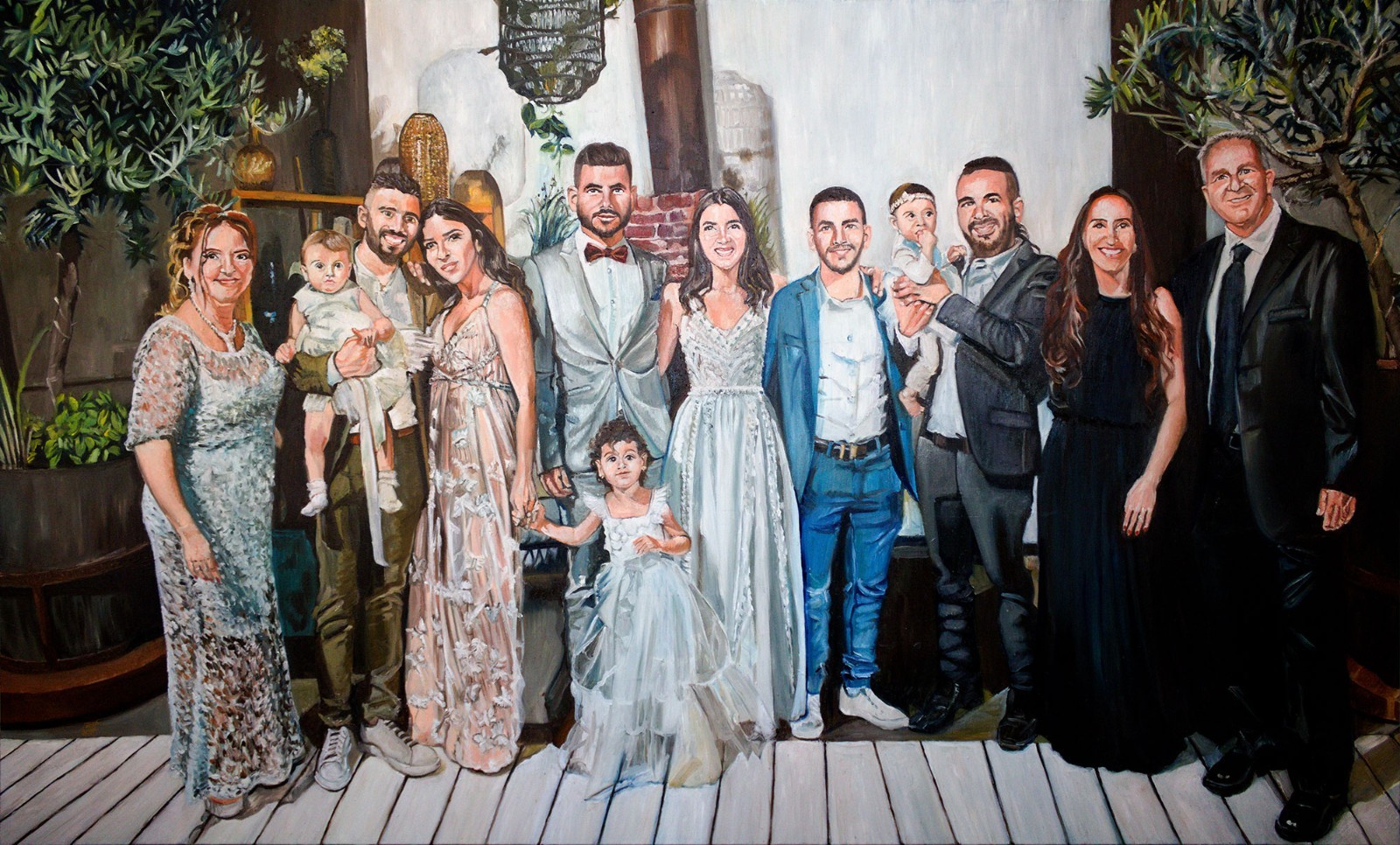
Hence the decisions that face anyone commissioning a family portrait painting today, and it should be said that these are exactly the same decisions. When no single photograph exists with all the family members in it, you can send several separate, good-quality photographs of each of them, and from these a single unified composition is built. I send the composition to the client for approval before the painting begins, and photographs of family members who are no longer with us can be combined into it, so that several generations are united in one picture.
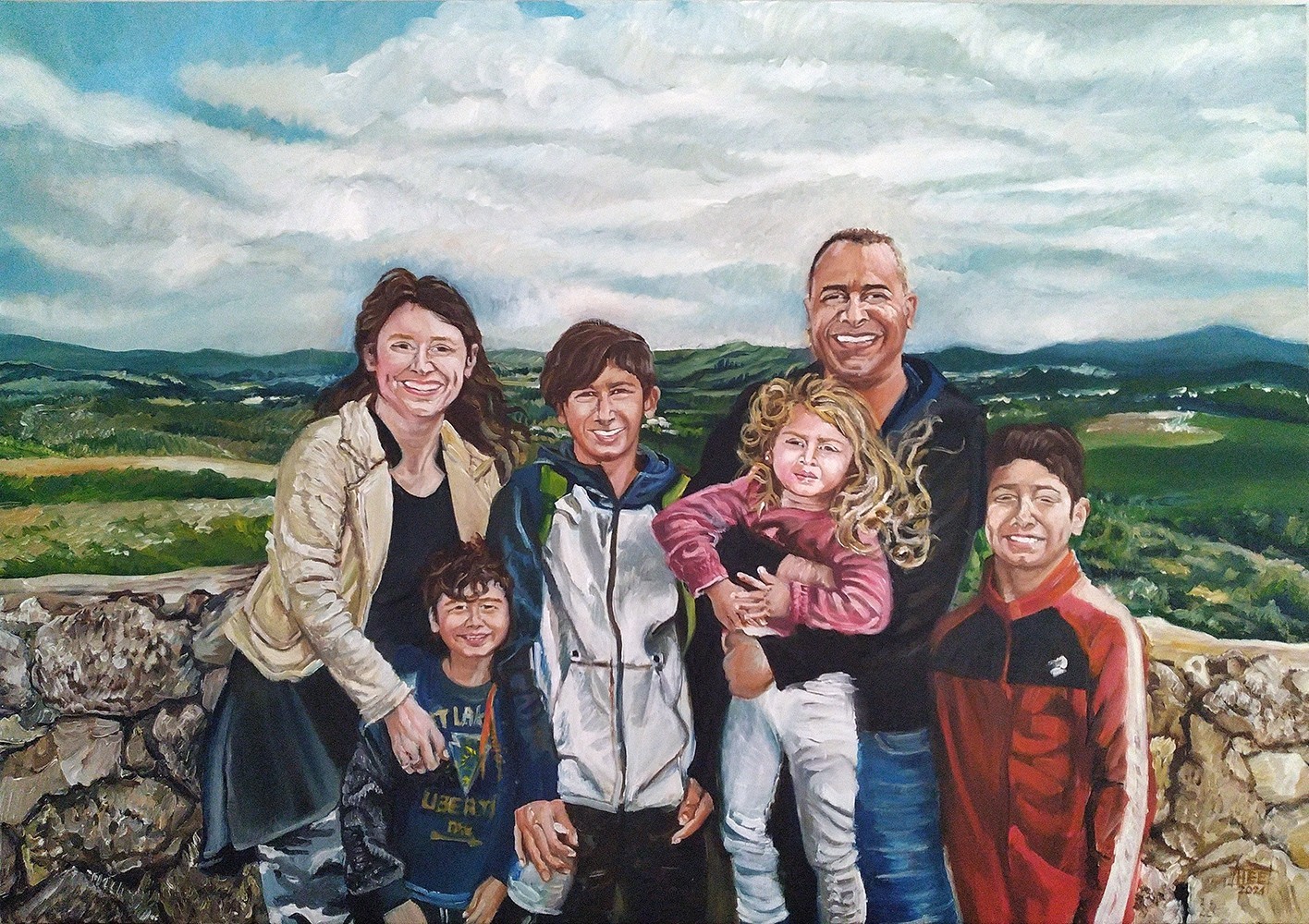
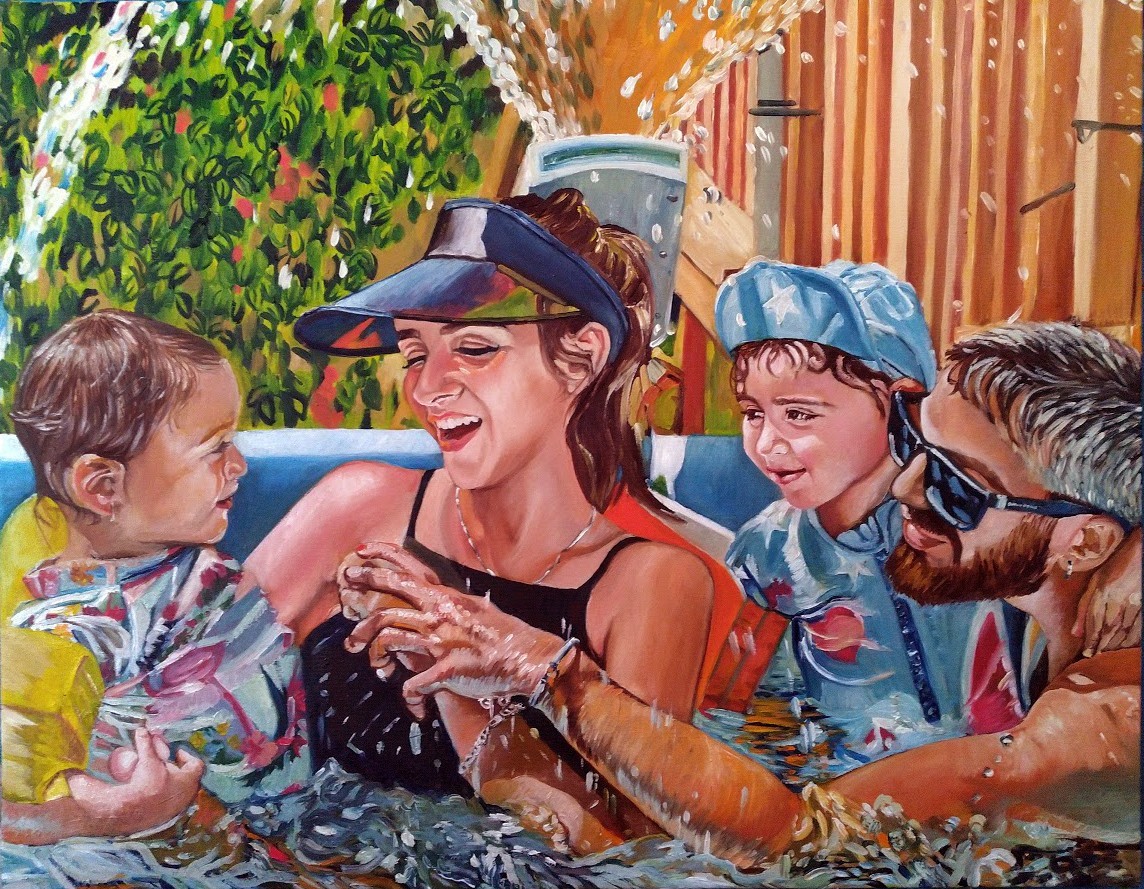
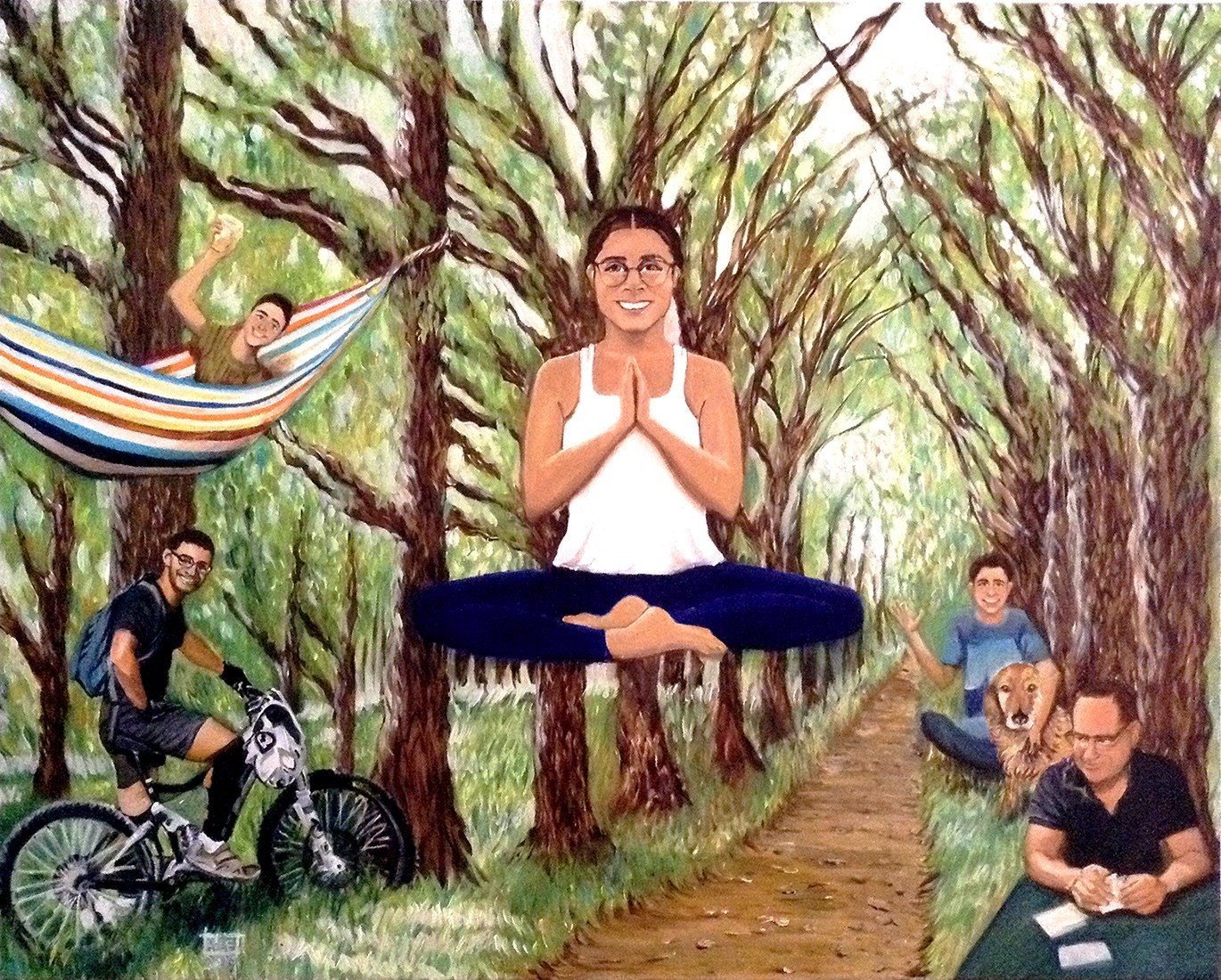
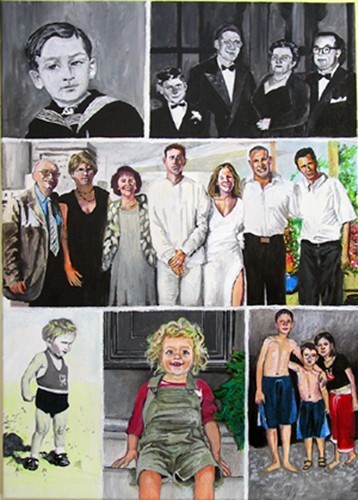
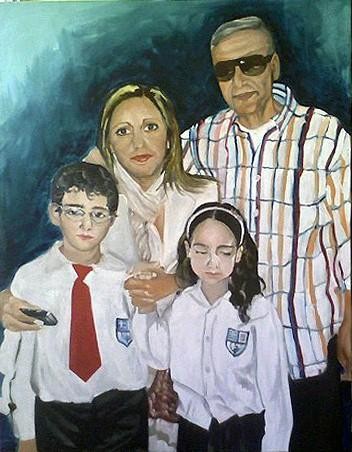
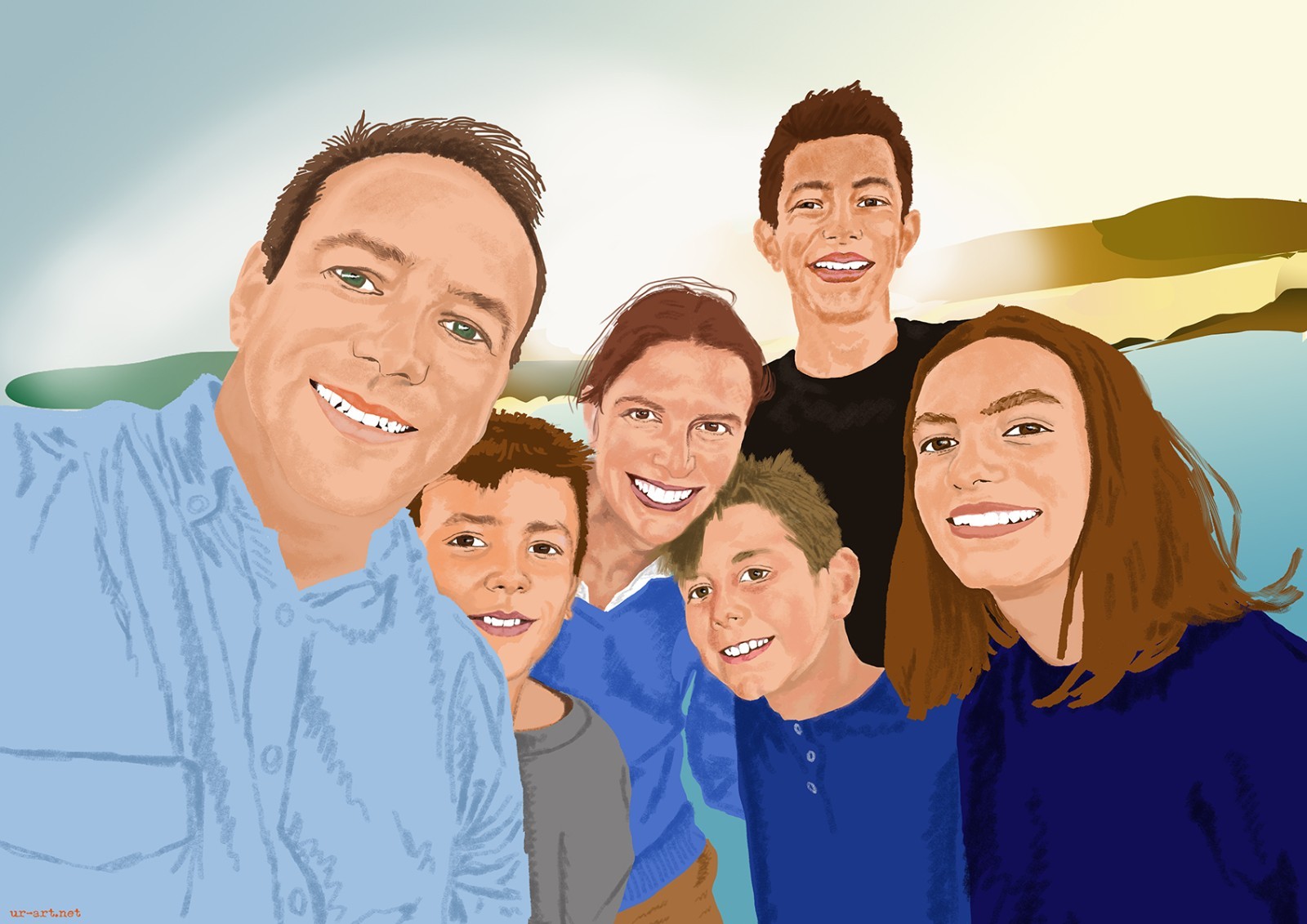
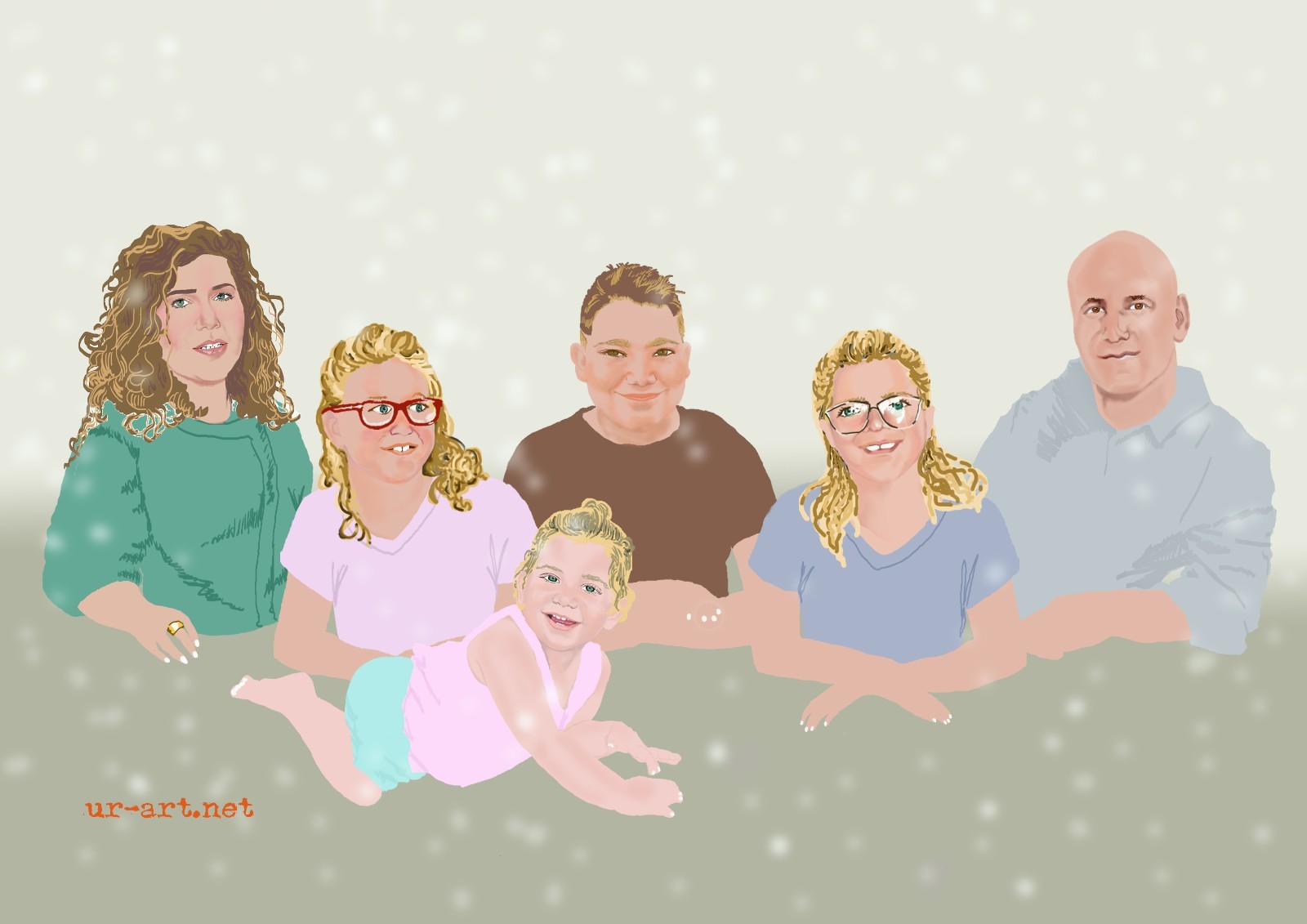
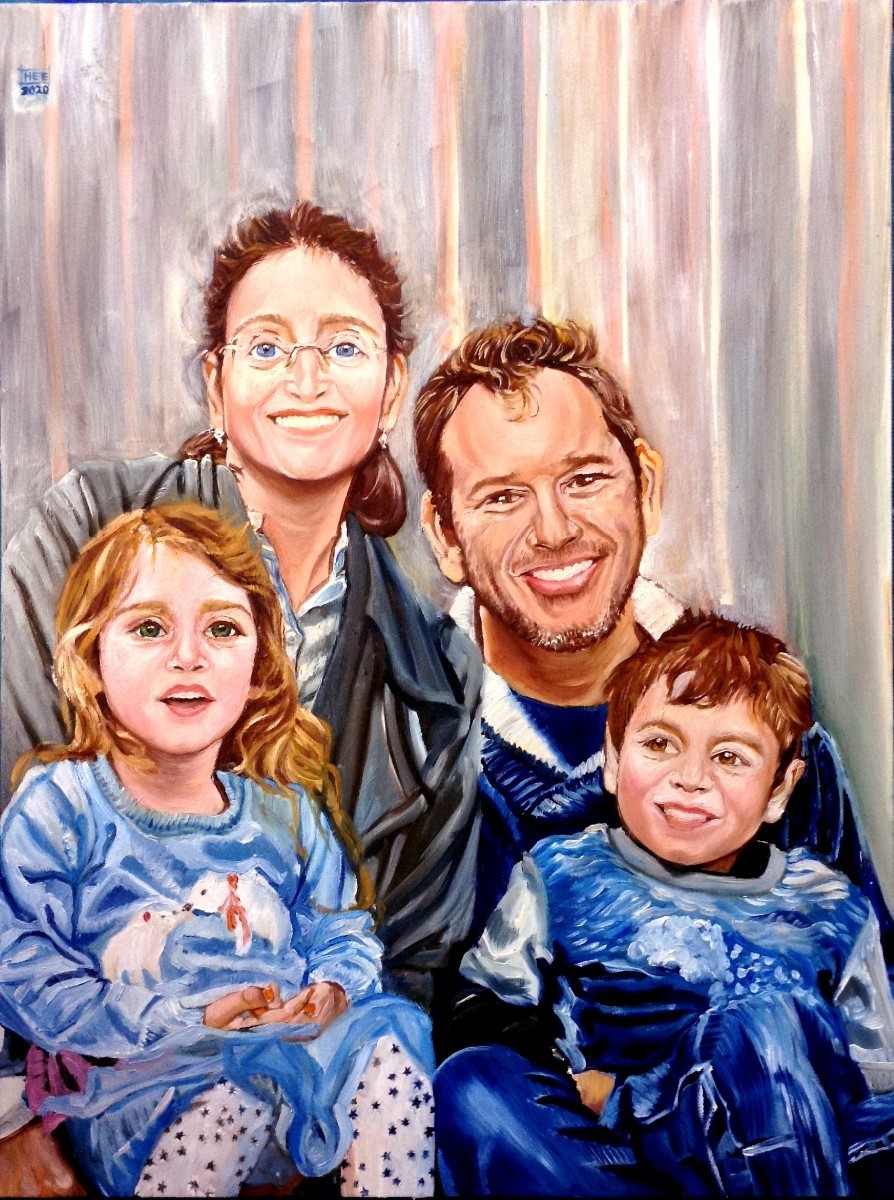
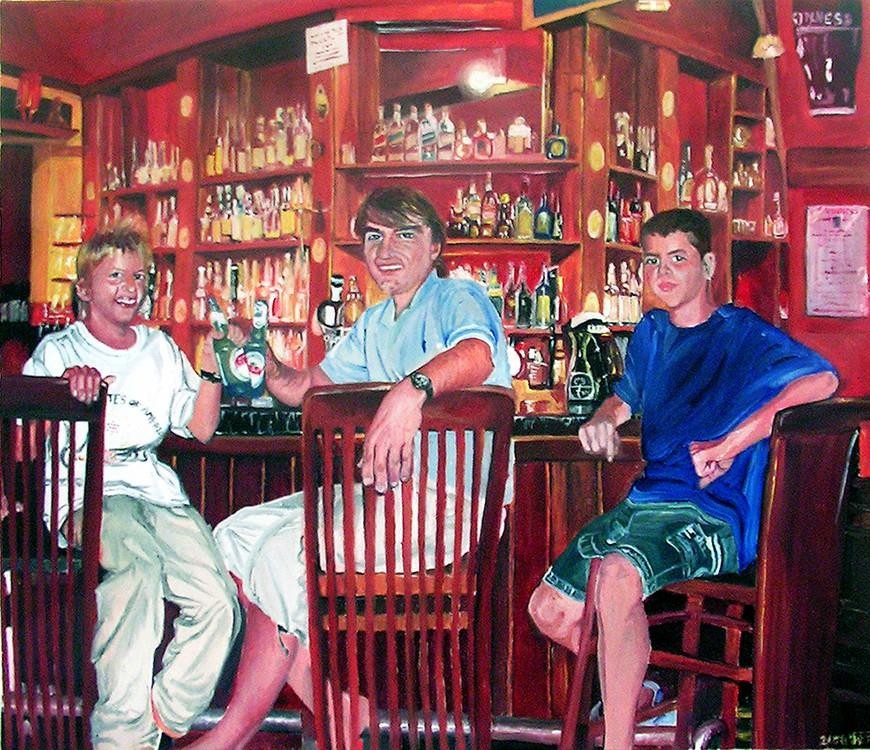
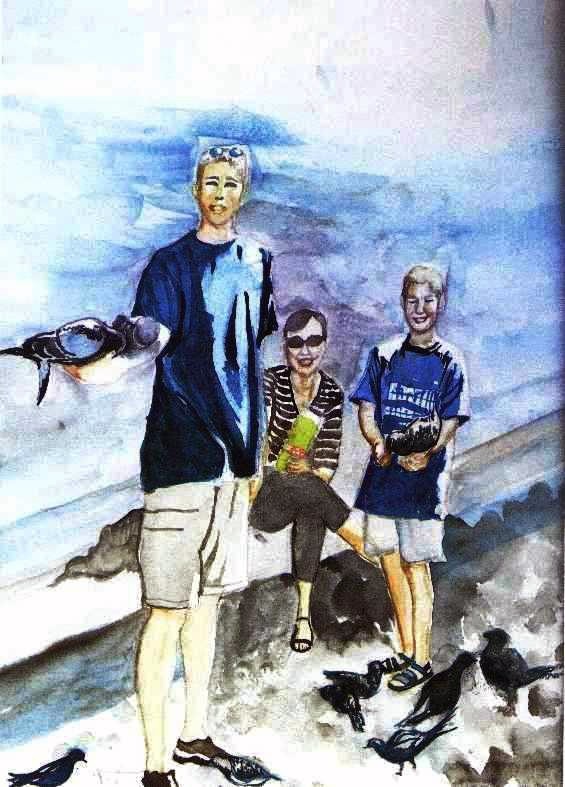
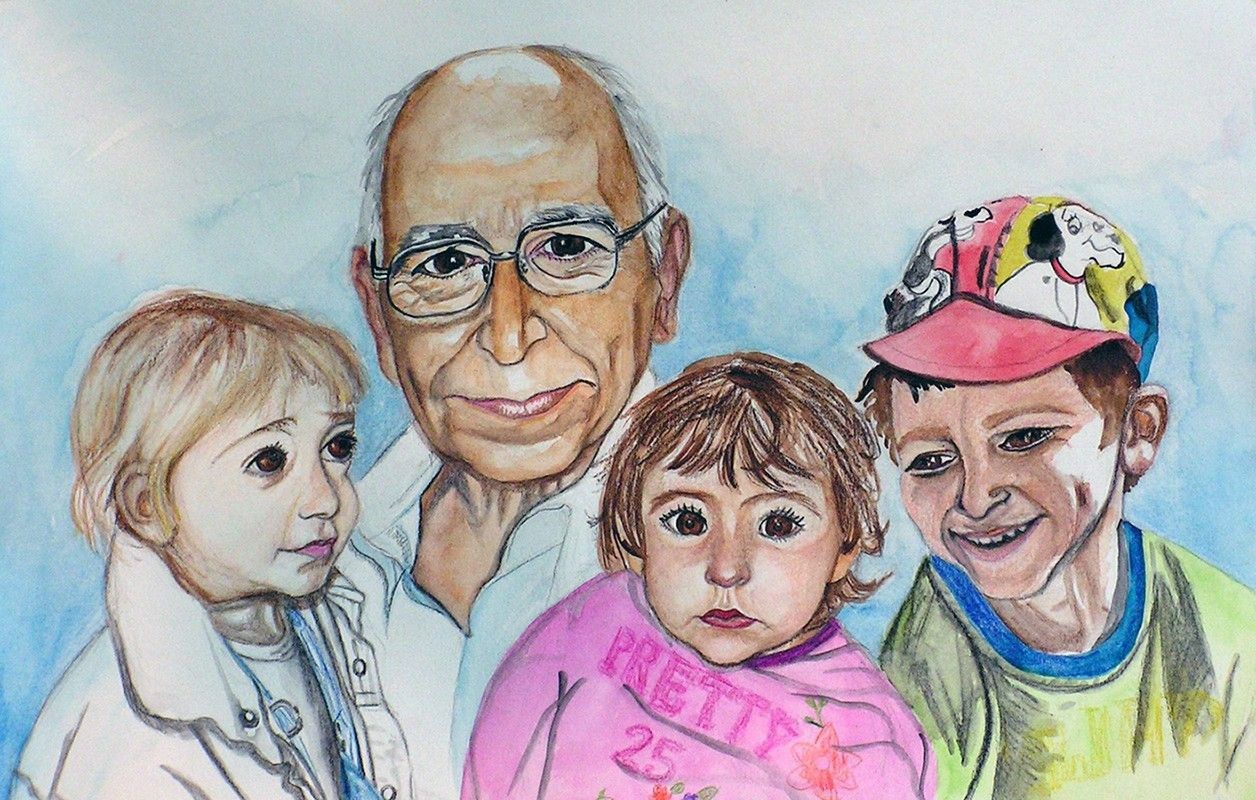
What remains for you is exactly what faced those who commissioned those portraits: who is included in the picture, who stands at its centre, and what is left open in it. You are always welcome to consult me on techniques and compositions, the starting point being a large, sharp and clear photograph — or several quality photographs of the family members separately. These decisions are still legible in those works centuries after they were made, and in your own painting they are visible before the paint touches the canvas.
Would you like a family portrait painting of your own family? Click here to order